
The Role of Digital Twins in Smart Manufacturing
The manufacturing industry is undergoing significant changes due to a slew of emerging technologies. Amongst these technologies, digital twins are revolutionizing smart manufacturing by bridging the physical and digital worlds. By creating digital replicas of physical systems, digital twins provide the manufacturing sector with unprecedented abilities like real-time insights, predictive maintenance, and efficiency enhancements. However, harnessing these benefits requires designing software that can support the transition to digital twins.
In this post, we’ll explore the concept of digital twins, their impact on the manufacturing process, and how Zuken’s E3.series and CR-8000 software allows manufacturers to embrace this new technology.
Understanding Digital Twins
In the context of product development, digital twins are virtual representations of physical products that allow engineers and designers to simulate, analyze, and optimize their designs.
The primary advantage of digital twins in product development is their ability to provide a comprehensive view of the product lifecycle. Engineers can visualize and simulate various scenarios to identify potential issues, accelerate development timelines, and minimize the need for costly physical prototypes and design iterations.
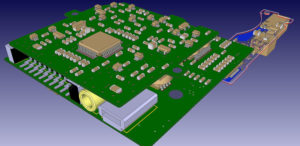
The manufacturing process can also benefit from a product’s digital twin since the generated data can be used to feed manufacturing equipment. Such data can include information regarding wire processing, splicing, creating molds, part procurement, assembly instructions, and quality testing.
The Impact on Production
Digital twins are revolutionizing the design and manufacturing processes in both PCB and wire harness/electrical production.
Traditionally, both PCB and wire harness design require multiple iterations and physical prototypes, which can be both time-consuming and expensive. Each iteration demands substantial resources, from ordering materials to fabricating and testing physical boards and harnesses. This iterative approach can extend development cycles and increase costs, particularly if engineers discover design flaws or performance issues late in manufacturing.
Digital twins mitigate these challenges by enabling designers to create and test virtual prototypes in a simulated, real-world environment. By integrating advanced simulation tools, engineers can evaluate electrical performance, thermal behavior, and mechanical stresses without the need for physical prototypes. This capability reduces the number of physical iterations required, allowing designers to resolve potential issues early in the design phase.
Moreover, digital twins enhance the manufacturing process by providing real-time monitoring and diagnostics. For example, in PCB and wire harness production facilities, this technology can simulate the entire assembly process. This includes everything from component placement, soldering for PCBs, wire routing, and connector assembly for harnesses.
Here, engineers can identify potential bottlenecks or defects and optimize workflows for both PCB and wire harness production to improve efficiency and quality control. They can also assess various production parameters, such as temperature settings or assembly speeds, in a virtual environment without disrupting actual operations.
With such predictive capabilities, smart manufacturing plants can reduce downtime, minimize waste, and ensure that final products—whether PCBs or wire harnesses—meet stringent quality standards.
Zuken’s E3.series and Digital Twins
Zuken’s E3.series is an EDA industry leader for leveraging digital twins to enhance wire harness design and production. Likewise, Zuken’s CR-8000 does the same for PCBs.
For wire harness manufacturing, the E3.series tool suite provides the ability to combine electrical connectivity and the mechanical 3D digital twin model to develop manufacturing documentation. Tools like Harness Builder allow engineers to create bills of materials and wire cut lists, and conduct cost/weight analysis in early design stages. As a result, engineers can use this integration to facilitate precise simulations and validations of harness designs. They can guarantee that designs meet all functional and spatial requirements before creating physical prototypes. Harness manufacturers can use this data to establish estimates, part procurement, and drive downstream smart manufacturing processes.
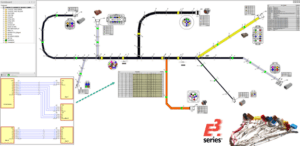
Similarly, for PCB manufacturing, CR-8000 facilitates the development of detailed digital twins by incorporating advanced PCB design tools. These tools allow engineers to create high-fidelity digital representations of PCBs, incorporating electrical and mechanical aspects to mirror real-world behavior.
With comprehensive modeling, engineers can perform thorough testing and optimization of their PCB designs in a virtual environment. This is in efforts to hopefully successfully identify and resolve potential issues early in the development process.
Additionally, the technology in E3.series and CR-8000 supports seamless integration with enterprise systems, such as PDM/PLM and ERP. This feature enables stakeholders to access up-to-date and accurate information. Teams can use this feature to maintain consistency and coordination across various stages of product development and manufacturing processes.
Achieving Efficiency, Quality
Digital twin technology provides real-time insights, predictive maintenance, and enhanced process optimization, becoming a key enabler of modern smart manufacturing. Fortunately for manufacturers, Zuken’s E3.series is a comprehensive tool facilitating the transition to digital twins for wire harness design. Similarly, Zuken’s CR-8000 brings advanced design features and digital twins to the world of PCB design. By leveraging these tools, manufacturers can streamline processes, reduce errors, and optimize resource use to achieve higher efficiency and product quality.

-
E3.series Technical Marketing Manager


- Blog

- Blog
- Blog
- Blog
Related Products and Resources
- Blog
- Blog
- Blog
- Blog