
Tech Tip: Automated Cable Protection Placement with Harness Builder for E3.series
Wire harnesses need cable protection to keep wires organized and shield them from the conditions they encounter throughout their service life. However, selecting the appropriate material and size for every harness segment can add repetitive work to complex designs and create downstream problems when the wrong parts are specified.
Harness Builder for E3.series simplifies this process with a utility that can automatically pick cable protection for individual segments or an entire harness. This tech tip introduces the capability, its available options, and how automated selection supports accurate wire harness design and manufacturing.
What is Cable Protection
Wire harnesses often pass through tight spaces and demanding environments where unprotected wires can become damaged. According to the IPC-D-620 standard, electrical engineers must design cable and wire harness assemblies to account for mechanical stress, temperature, moisture, contamination, and other factors. Cable protection, such as tubing, sleeving, loom, and tape, helps protect these assemblies against these hazards.
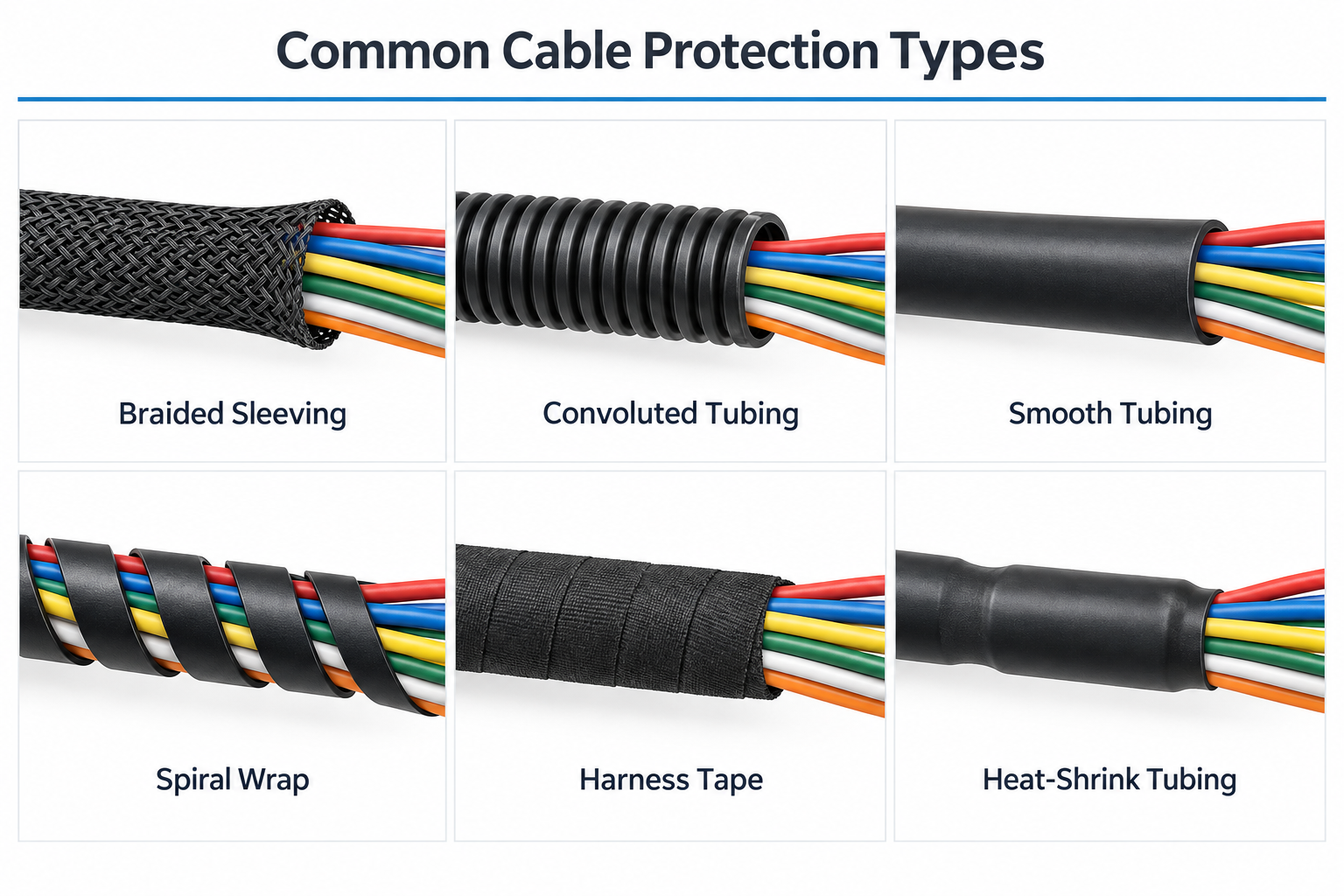
Why is Selecting Cable Protection Challenging?
Choosing the proper cable protection is more complicated than picking whatever is available at a nearby hardware store. Different harness segments experience varying conditions depending on their routing. For example, on a tractor, wires outside the cab need protection from dirt, water, and scrapes, while wires inside the cab face fewer hazards but have narrower routing paths.
In addition, each segment also needs cable protection sized for its bundle diameter. Oversized protection wastes material, space, and money, while undersized protection will not fit around the wires. The correct types, sizes, and lengths must appear on the BOM so production receives the correct quantities.
How Harness Builder Automatically Selects Cable Protection
Harness Builder for E3.series automates cable protection placement using information already captured in the harness design. The user selects an individual segment or the entire harness and launches the Cable Protection utility. Harness Builder identifies the wires and cables routed through each selected segment and calculates the resulting bundle diameter.
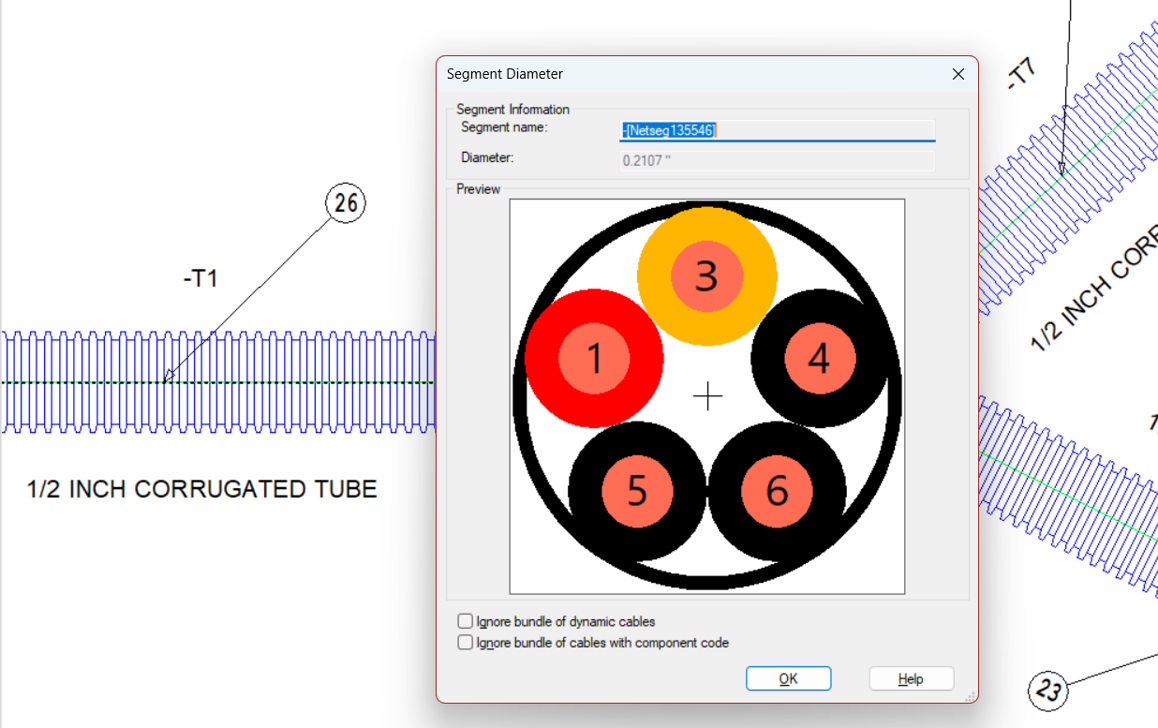
The utility then compares that diameter against the available cable protection components and selects the appropriate size for each segment. The selected protection appears on the formboard and is added to the project BOM with the required length or quantity.
For this process to work, cable protection components must be configured with the information the utility needs for selection and placement:
- The symbol must use the Attribute Text Template type, with Symbol Graphic set to Replicate.
- The component class assigns the part to a cable protection family.
- The Tube Diameter and Unit of Measure attributes provide the sizing data used in calculations.
Configure Cable Protection for Different Requirements
Automatic selection does not force every harness to use the same material or sizing rule. Users choose a cable protection class that limits the utility to a specific family of parts, such as an approved type of tubing or sleeving. This helps organizations apply the appropriate materials for different environments and manufacturing requirements.
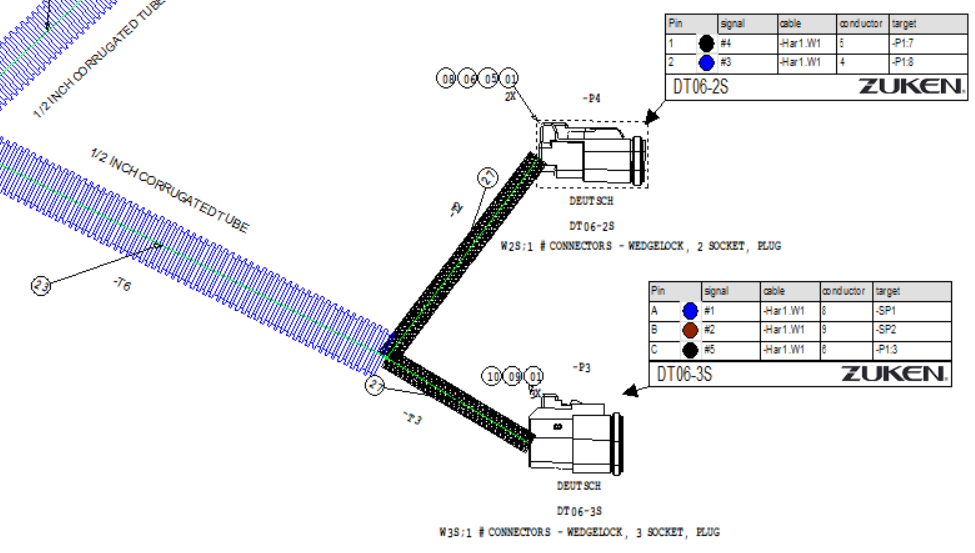
Users also define the desired fill percentage, which determines how closely the selected protection fits around the wire bundle. Changing this value may produce a different size for the same segment. Company-specific materials and supplier parts can also be added to the component database, allowing the utility to select them alongside the standard library options.
Watch Harness Builder’s Cable Protection Utility in Action
This video demonstrates how to select harness segments, choose a cable protection class and fill percentage, and run the Cable Protection utility. It also shows how to create a custom cable protection part and make it available for automatic selection.
Who Benefits from Automatic Cable Protection Selection
Automatic cable protection selection supports teams throughout design and manufacturing:
- Electrical design teams: Apply consistent cable protection requirements across vehicles and systems.
- Wire harness manufacturers: Select appropriate materials and sizes across different harness segments based on customer requirements.
- Purchasing and production planning: Receive accurate part numbers, lengths, and quantities to order and build each harness.
Summary and additional resources
Selecting the right cable protection requires matching the material and size to each harness segment’s bundle diameter, routing, and operating conditions. Harness Builder for E3.series automates this process and generates accurate BOM quantities by calculating bundle diameters and segment lengths.
Learn how E3.series supports electrical and harness design from concept to manufacturing.
- Learn how Zuken E3.series helps engineers meet IPC-D-620A standard
- See how Harness Builder optimizes wire harness design for manufacturing
- Watch Harness Builder in action

-
Applications Engineer

- Blog

- Blog

- Blog

- Blog
Related Products and Resources
- Blog
- Products
- Products
- Blog