
How to Transition From Document-Based to Model-Based Engineering in 5 Steps
Understanding how to transition from document-based to model-based engineering can feel like planning an enterprise-wide transformation. It does not have to start that way.
Teams can begin a model-based systems engineering (MBSE) effort with one measurable engineering problem, connect only the information needed to address it, and expand after demonstrating value. A focused MBSE implementation strategy prioritizes engineering outcomes over model size or complexity.
How to Transition From Document-Based to Model-Based Engineering
Start with a specific engineering problem. Identify the information that must be connected, choose a focused pilot, involve the stakeholders who use it, and measure the results before expanding. This allows teams to adopt MBSE gradually while demonstrating its engineering value.
What Changes When Engineering Becomes Model-Based?
Document-based engineering often spreads critical information across requirements documents, spreadsheets, diagrams, presentations, email, and review notes. Each file may work well on its own, but teams can struggle when they need to understand the relationships between them.
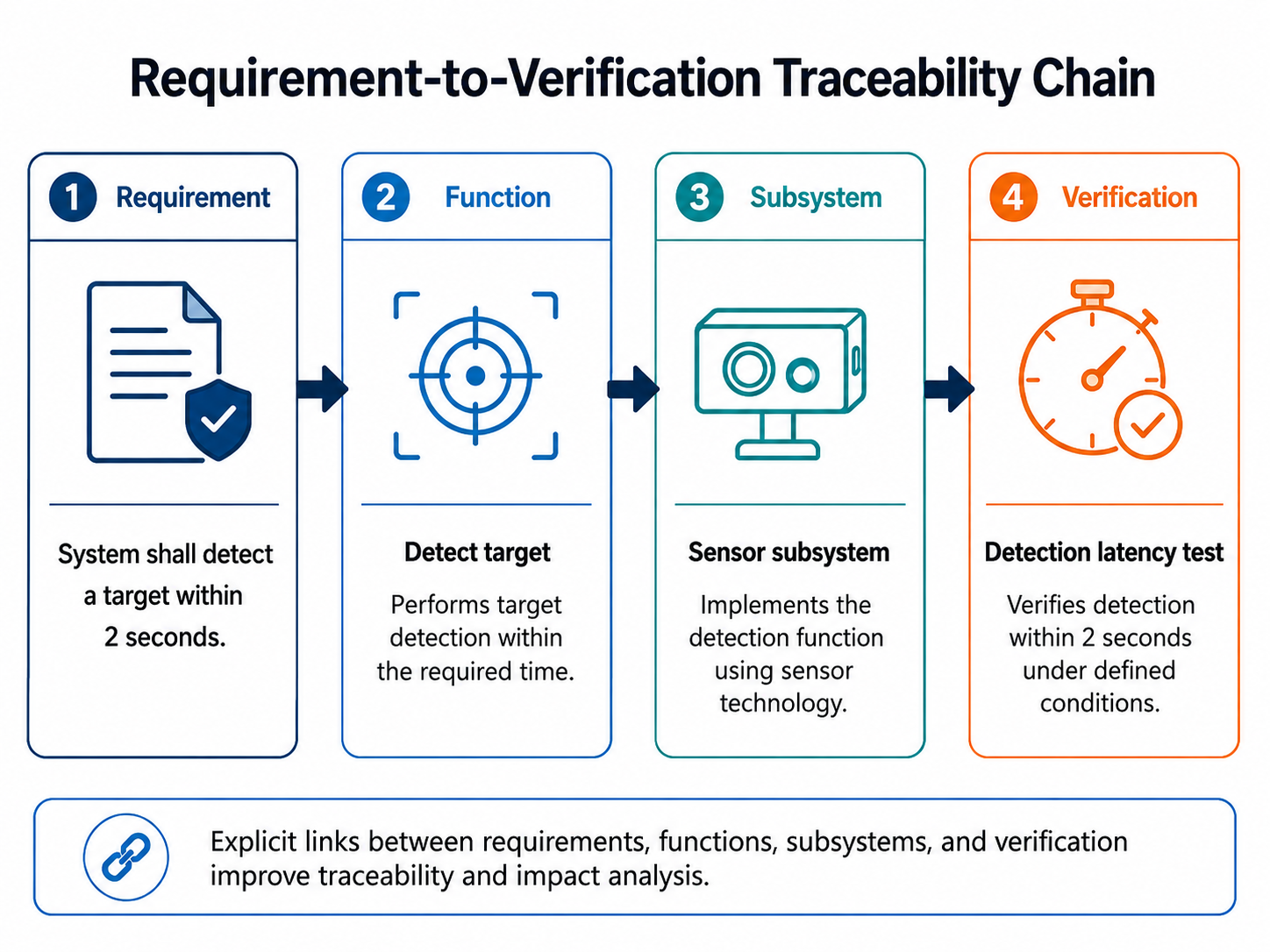
A requirement, for example, may affect several functions, interfaces, components, and verification activities. When those relationships live in separate files, engineers may need to trace them manually and reconcile changes across multiple sources.
MBSE connects this information within a system model so requirements, functions, interfaces, architecture decisions, and verification information can maintain explicit relationships. Documents can remain part of the engineering process; they are simply no longer the only place where critical engineering relationships are maintained.
For a broader explanation of how this fits into the larger engineering environment, see MBSE vs. Digital Engineering: What’s the Difference?.
1. Start Your MBSE Implementation Strategy With a Specific Engineering Problem
“Adopt MBSE” is too broad to be a useful first objective. Instead, choose an engineering problem with measurable consequences.
Examples include inconsistent requirements, interface errors, slow design reviews, manual traceability, late architecture changes, or incomplete verification coverage. Selecting a concrete problem gives the team a clear reason to use MBSE. It also provides a practical way to judge whether the pilot improves the process.
For example, engineers may spend hours reconciling requirements across different files. A pilot could focus on reducing that effort while improving requirements traceability. Before the pilot begins, define what improvement would look like so the team has a baseline for comparison.
The objective is engineering improvement, not simply creating a model.
2. Define the Information That Must Be Connected
Once the problem is clear, identify the information needed to address it. Depending on the use case, this may include requirements, functions, behaviors, interfaces, architecture decisions, parameters, and verification relationships.
Teams do not need to model every available detail. Capture only the connected information needed to support the pilot’s decisions.
For example, a subsystem model might connect key requirements with logical functions and interfaces. That model can communicate design intent without recreating every detailed engineering artifact.
3. Choose a Focused MBSE Pilot
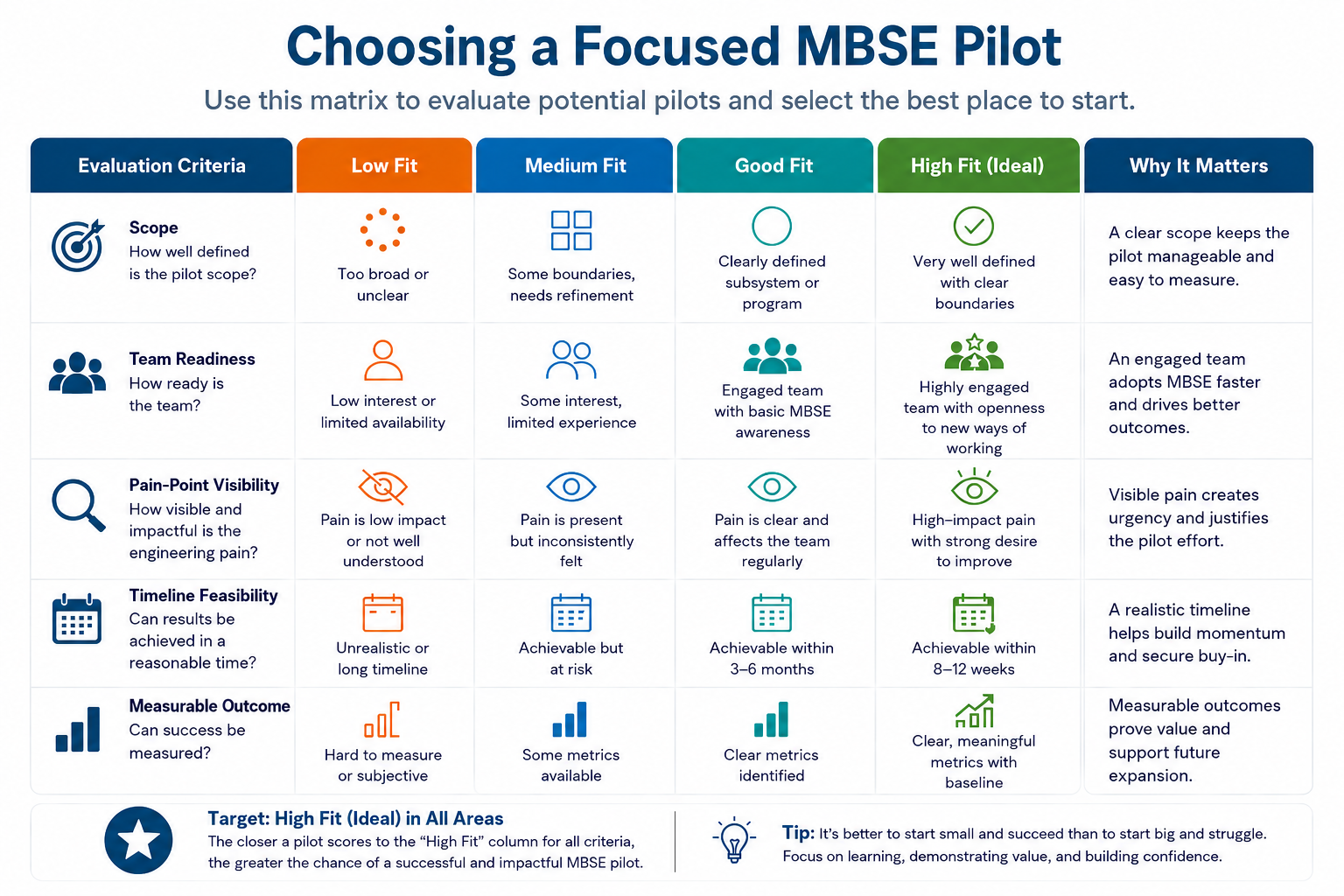
Once the problem and the scope of information are clear, choose where to test the MBSE implementation strategy. The first pilot should matter, but it should also be manageable.
Look for a system, subsystem, or program with a defined scope, a visible pain point, an engaged team, an achievable timeline, and a measurable outcome. Avoid choosing the organization’s largest or most complicated program first.
A limited pilot makes it easier to identify what works. It also helps teams separate modeling challenges from process, training, and organizational issues. Most importantly, a focused pilot provides evidence that leaders can use to decide whether to expand MBSE.
4. Involve People Beyond the Modeling Team
MBSE creates more value when connected engineering information reaches the people who need it. Systems engineers may create and maintain the model. However, program leaders, domain engineers, reviewers, verification teams, and customers may also need its information.
That does not mean everyone must become an expert modeler. Instead, give stakeholders relevant views of the information they need for decisions, reviews, and collaboration.
GENESYS supports the development of a connected system model. Sidekick extends access through browser-based model viewing, collaboration, and structured review workflows.
This broader access helps make the model part of the development process rather than an artifact used only by specialists.
5. Measure the Result Before Expanding
A successful MBSE pilot should improve engineering outcomes. Establish a baseline before the pilot so the team can compare the new approach with the previous process.
Useful measures can include review cycle duration, engineering change turnaround time, traceability effort, verification coverage, documentation effort, late-stage defects, or the time required to assess a design alternative.
Avoid measuring success by the number of diagrams or model elements created. A smaller model that improves decisions can deliver more value than a large model that few people use.
Expand the approach where measurable engineering value has been demonstrated. The pilot should provide evidence about what to scale and what to adjust. It can also reveal where additional process or training support is needed.
Common MBSE Transition Mistakes
- Treating software selection as the strategy. A modeling platform cannot replace defined methods, ownership, governance, and adoption planning.
- Trying to model everything immediately. Excessive scope delays results and makes value harder to demonstrate.
- Recreating documents inside the modeling tool. The goal is to connect engineering information, not recreate existing files.
- Limiting access to trained modelers. A model provides limited organizational value if important stakeholders cannot use its information.
- Measuring activity instead of outcomes. Better traceability, faster reviews, and reduced rework matter more than model size.
Start Small, Prove Value, Then Expand
Transitioning from documents to models does not require changing every engineering process at once. Start with a meaningful problem, connect the necessary information, select a focused pilot, bring the right stakeholders into the process, and measure the engineering result.
As MBSE matures, the connected system definition can support broader digital engineering workflows. System-level information can inform detailed design, analysis, verification, manufacturing, and lifecycle activities rather than relying solely on manually translated documents.
For electrical development, the E3.GENESYS Connector can connect selected system information with the downstream E3.series wire harness design. See Model-Based Wire Harness Design for an example of how system intent can connect with detailed electrical development.
Once a team demonstrates measurable value, it can expand the MBSE implementation strategy with greater confidence. The pilot also shows where connected models provide the most benefit.
Next Step
Explore GENESYS to see how connected requirements, architecture, interfaces, and verification can support a focused MBSE pilot.

-
Vice President of Marketing for Zuken USA


- Blog

- Blog

- Blog

- Blog
Related Products and Resources
- Blog

- Blog
- Blog
- Blog