
CSDL and SysML: Making MBSE Easier to Understand and Use
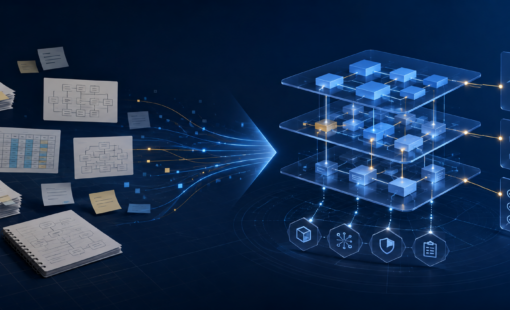
Model-based systems engineering has changed how teams define, analyze, and communicate complex systems. Instead of relying on disconnected documents, MBSE gives teams a structured model that connects requirements, behavior, architecture, and verification.
However, the value of MBSE depends on more than the model itself. It also depends on whether people can understand and use the information inside it.
That is where the relationship between CSDL and SysML matters.
SysML has played an important role in systems engineering. It gave teams a shared modeling language and helped advance formal model-based practices. For many organizations, it remains an important standard for communicating system structure, behavior, requirements, and parametrics.
Even so, SysML can be difficult for broader teams to adopt. Its diagrams and notation often require specialized training. As a result, the model may stay in the hands of experienced modelers while customers, program managers, detailed design teams, and other stakeholders rely on simplified explanations outside the model.
The Comprehensive Systems Design Language, or CSDL, helps close that gap. Used in GENESYS, CSDL gives teams a natural-language approach to MBSE while still supporting SysML views when they are needed.
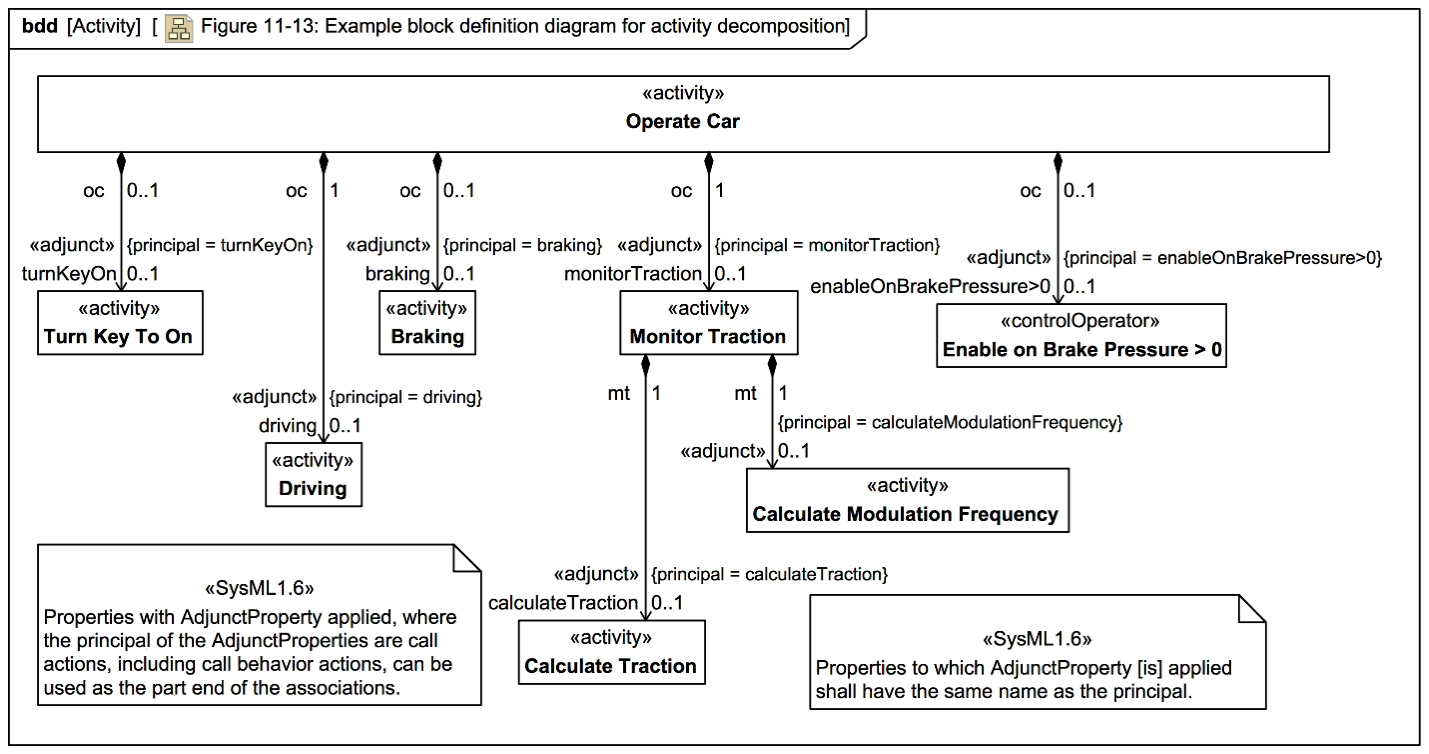
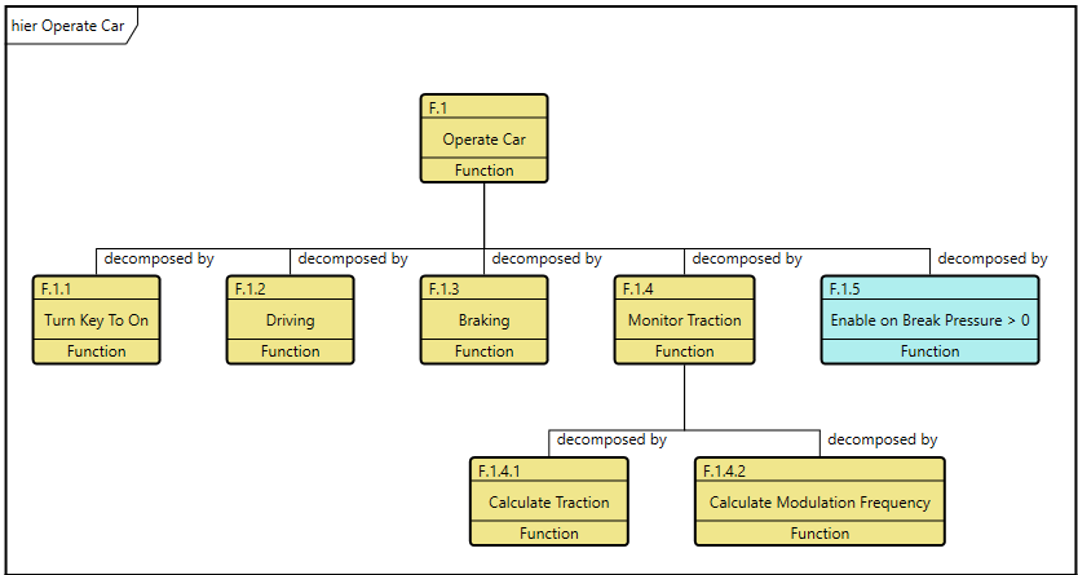
CSDL and SysML Support Different Stakeholder Needs
Systems engineering teams need rigor. They also need to facilitate clear communication.
SysML provides a standards-based way to represent complex system information. That is useful for engineers who need formal diagrams and well-defined modeling conventions and constructs. However, not every stakeholder needs to read a detailed block definition diagram or interpret specialized notation.
CSDL takes a different approach. It is built around Entities, Relationships, and Attributes (ERA). These model elements can be read like clear statements.
For example, a model can show that the function “Generate Mechanical Energy” is performed by the component “Engine.” That statement is still precise, but it is also easy to understand.
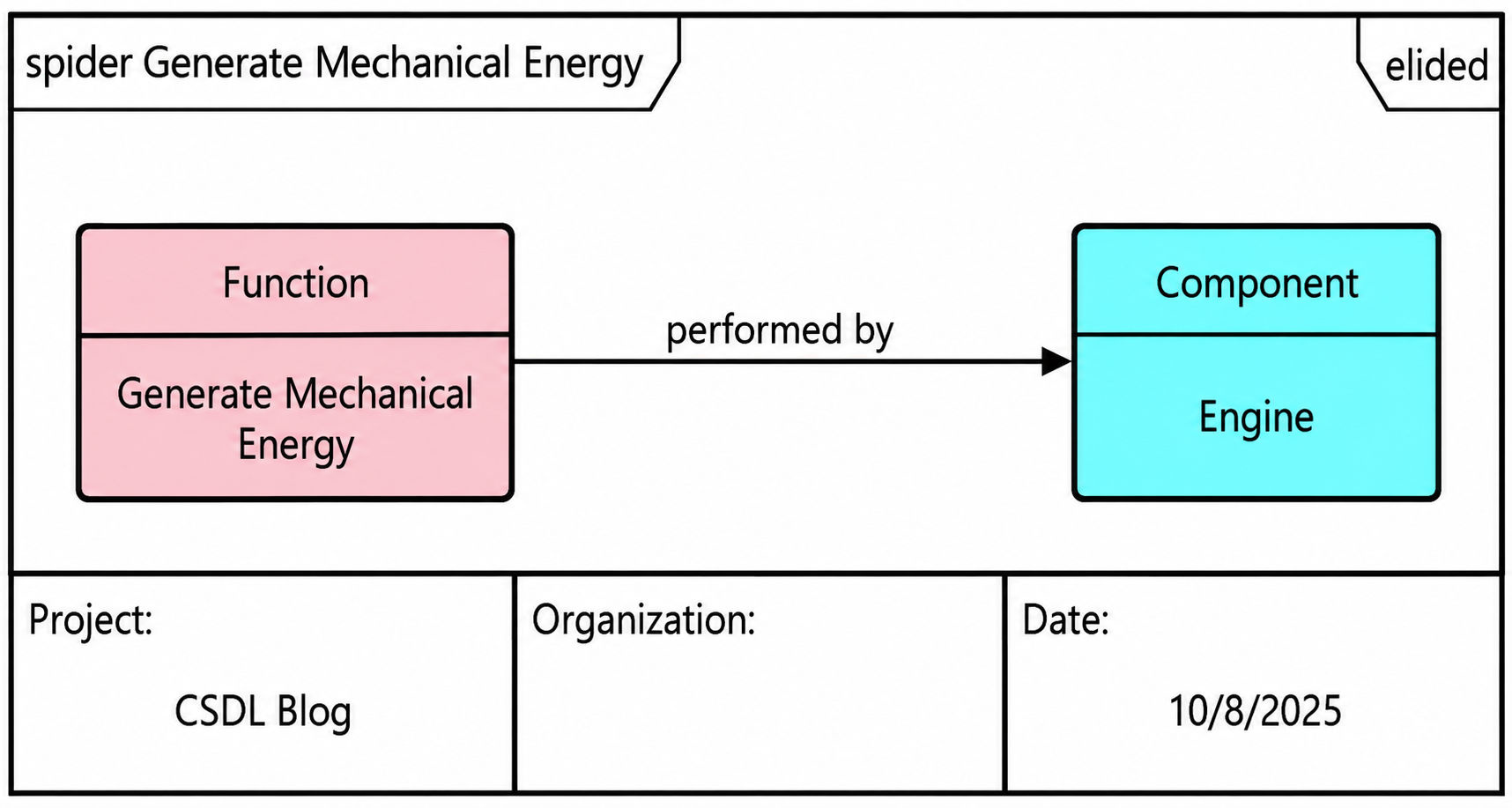
This matters because system development is not limited to systems engineers. Program managers, business leaders, customers, operations teams, and detailed design teams all need access to system information. When the model is easier to read, more people can participate in reviews and decisions.
Natural-Language MBSE Reduces the Learning Curve
One of the barriers to MBSE adoption is the time required to learn the language, method, and tool.
CSDL helps reduce that barrier by using concepts that align more closely with how systems engineers already think and communicate. Instead of insisting every user becomes fluent in esoteric notation, CSDL helps broader teams create and own models with familiar concepts.
That does not remove the need for discipline. A strong model still requires structure, ownership, and sound engineering judgment. However, it does help teams focus more time on the system and less time on decoding the language.
In GENESYS, users can build models with intuitive terminology, drag-and-drop construction, and automatically generated views. This makes MBSE more approachable for new users while still supporting the rigor experienced systems engineers expect.
CSDL Creates a More Complete System Model
A useful system model needs to do more than produce diagrams.
Teams must connect requirements, functions, physical architecture, interfaces, verification activities, risks, decisions, and program context. When those elements live in separate tools or documents, traceability becomes exponentially harder to maintain.
CSDL supports a broader view of the system lifecycle. It can represent all the essential concepts above as well as information necessary to perform specialty (or domain-specific) engineering. SysML (as specified to date), still has some difficulty fully addressing those needs.
That broader coverage helps teams create a more complete model. It also supports a single source of truth for system decisions and design rationale.
For organizations managing complex products, that consistency matters. It reduces the risk of outdated views, conflicting documents, and missed dependencies.
GENESYS Keeps CSDL and SysML Views Consistent
CSDL does not require teams to choose between natural-language MBSE and SysML.
In GENESYS, teams can use CSDL as the underlying modeling language and still generate SysML views from the same model data. That gives teams flexibility.
Systems engineers can use SysML diagrams when formal views are needed. Other stakeholders can use less specialized GENESYS views when they need to review and understand model content for their own purposes.
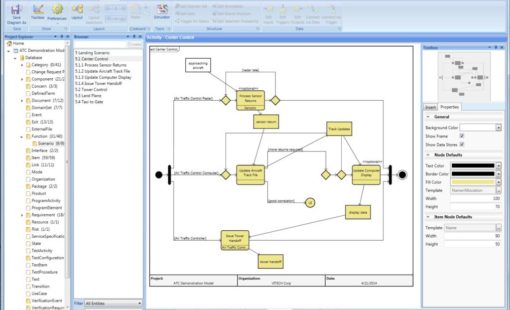
This “model once, view many ways” approach is valuable because different audiences need different levels of detail. A technical reviewer may need a SysML activity diagram. A program manager may need a hierarchy view, relationship view, or focused review package.
Both views should reflect the same model. GENESYS helps maintain that consistency by generating views from the underlying data model. As the model changes, the views stay aligned.
Sidekick Extends MBSE Collaboration Beyond Modelers
Even the best model has limited value if only a few people can access it.
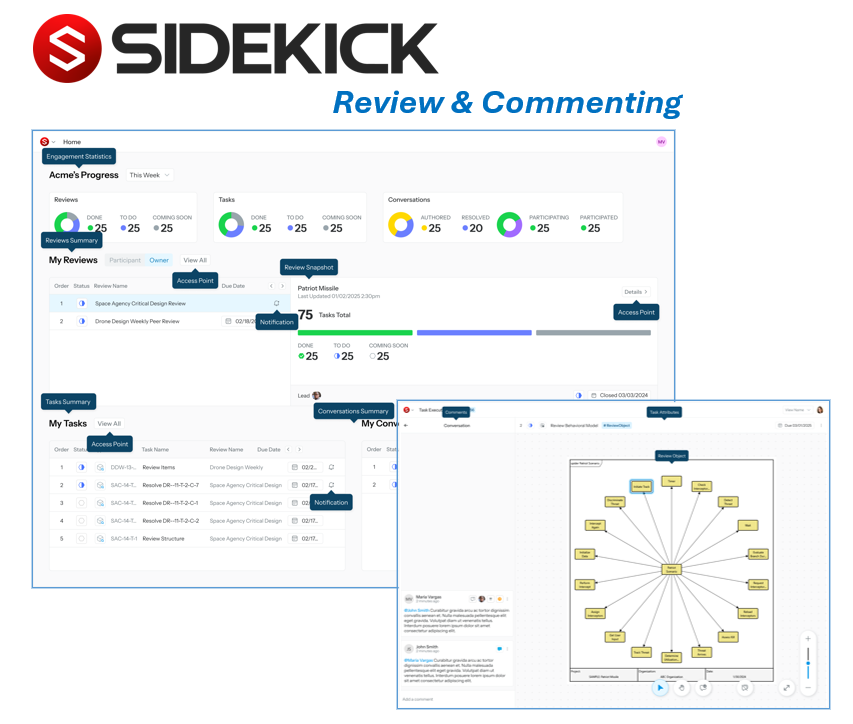
Sidekick extends GENESYS model access through a web-based collaboration environment. Stakeholders can review targeted model content, comment, and participate in structured reviews without needing full modeling software or deep MBSE expertise.
This helps teams move model review out of disconnected email threads and static document markups. It also makes decisions more traceable.
For engineering managers and program teams, this is a practical advantage. They can bring the right people into the review process earlier, capture feedback in context, and keep discussions tied to the model.
CSDL and SysML Are Stronger Together
Teams do not need to frame this as CSDL versus SysML.
SysML remains important for standards-based system modeling. CSDL adds clarity, accessibility, and semantic structure that help more people work with the model.
Together, they support a more practical MBSE strategy. Teams can meet formal modeling expectations while giving stakeholders views they can understand and use.
For organizations trying to expand MBSE adoption, that balance is important. The goal is not to create more diagrams. The goal is to improve shared understanding, reduce rework, and make better engineering decisions. CSDL helps make that possible.
Make MBSE Easier to Share, Review, and Trust
Complex systems require input from many disciplines. That makes communication a core engineering challenge.
CSDL helps teams create models that are easier to understand, easier to review, and easier to keep consistent. With GENESYS, teams can also generate SysML views from the same model, giving each stakeholder the right view for their role.
If your team is working to make MBSE more practical across engineering, program management, and stakeholder reviews, CSDL offers a strong foundation.
Explore GENESYS to see how CSDL and SysML work together in connected MBSE modeling software that supports engineering rigor, stakeholder review, and clearer system decisions.
Editor’s note: Some original images provided by Brian Selvy.

-
Solutions Architect

- Blog

- Blog

- Blog

- Blog
Related Products and Resources

- Pages

- Products

- Blog
- Products
Digital Engineering requires a model-based design process that begins in Systems Engineering. Zuken acquired Vitech Corporation, a leader in Systems Engineering practices and MBSE solutions, with the intent of implementing an E/E model-based design process.