
Digital Thread & Engineering Orchestration
Aligning federated engineering tools through a model-based backbone and orchestrating their execution across the lifecycle
Menu
Digital Thread: From System Intent to Engineering Execution
Engineering projects generate far more than requirements, models, and design data. Every review, approval, and design decision contributes knowledge that influences future engineering work. Yet in many organizations, this knowledge becomes fragmented across documents, emails, and disconnected tools.
As projects evolve, engineers can often identify what changed, but reconstructing why it changed becomes increasingly difficult. This loss of context slows decision-making, complicates impact analysis, and increases the risk of repeating earlier mistakes.
A meaningful Digital Thread preserves not only engineering artifacts, but also the relationships and rationale that connect them across the lifecycle.
The example below shows one practical manifestation of this principle.
Beyond Tool Integration
Many digital transformation initiatives focus on connecting tools, harmonizing data, and automating workflows. These efforts can improve efficiency, but they often leave the central engineering challenge unresolved: maintaining a consistent understanding of the system across domains.
Complex product development depends on specialized tools, each with its own models, structures, and semantics. Even when connected, these tools do not automatically share a common system logic.
As a result, engineering remains fragmented, and alignment depends on manual coordination rather than structural consistency. This slows decision-making, increases coordination effort, and raises the risk of inconsistencies.
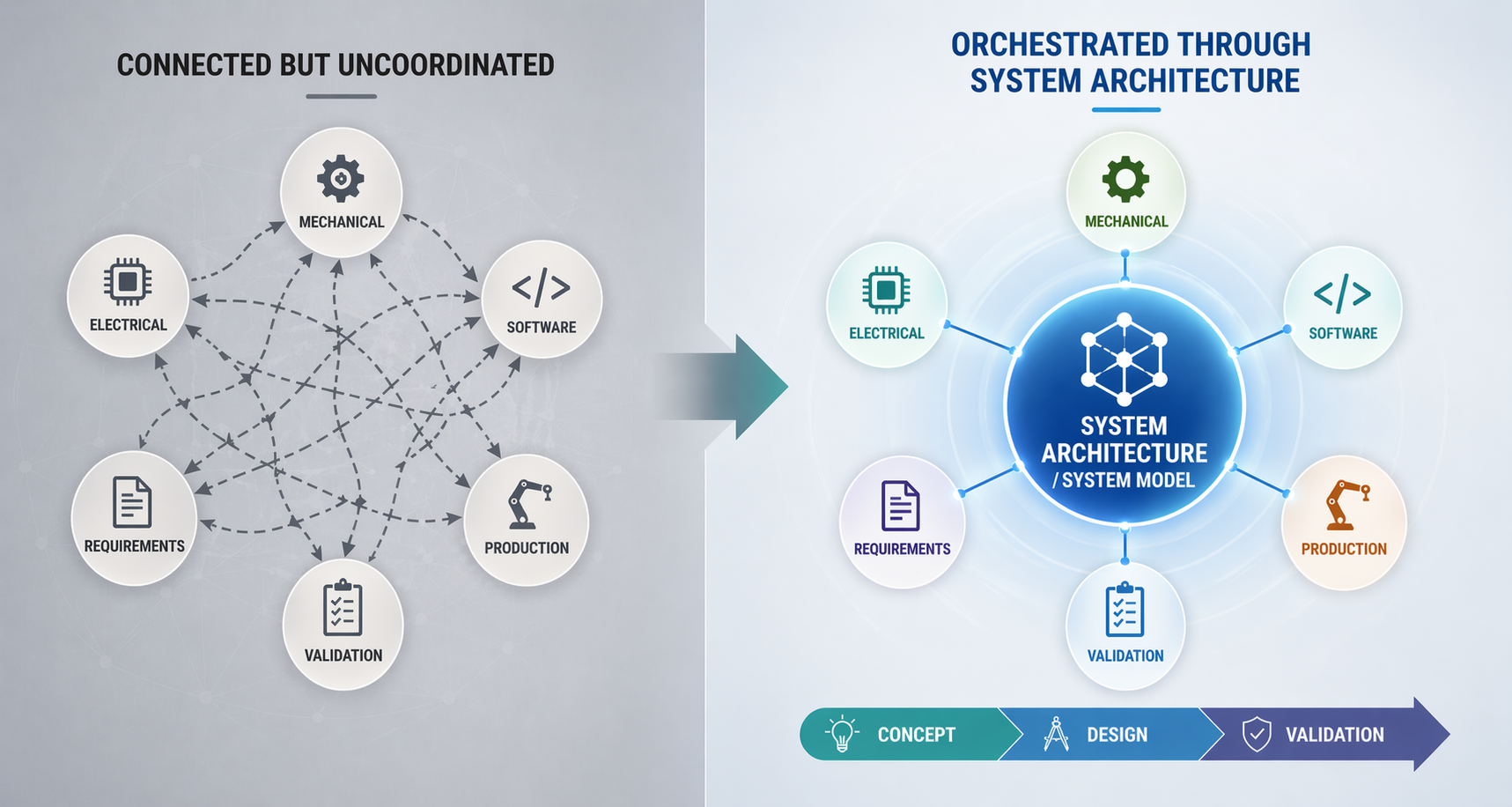
From tool integration to engineering orchestration: a model-based backbone aligns federated systems, enabling traceability, coordinated change, and lifecycle-wide decision-making.
A meaningful Digital Thread goes beyond connecting tools — anchoring engineering artifacts in a shared system context to ensure alignment, traceability, and value-driven decisions.
Federated Systems Need a Shared Architectural Reference
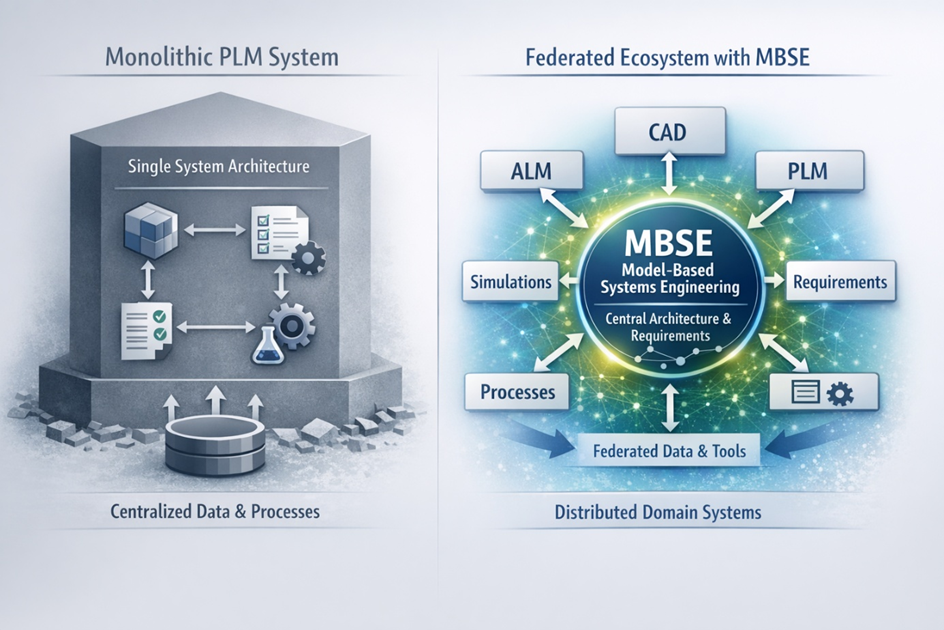
Today’s engineering landscapes are inherently federated. Mechanical, electrical, software, and manufacturing domains rely on specialized environments that evolve independently.
This increases flexibility and domain efficiency, but it also raises a fundamental question: who defines the system architecture that connects these domains?
Without a shared architectural reference, integration remains limited to connecting interfaces. System intent remains unclear, dependencies are often discovered late, and consistency must be enforced manually.
The Digital Thread cannot be achieved through tool integration alone. It requires an architectural backbone that defines how engineering artifacts relate to the system as a whole. Without this backbone, teams rely on manual coordination rather than structured alignment. Without this backbone, teams rely on manual coordination rather than structured alignment.
The Cost of Fragmented Engineering
Federation does not have to mean fragmentation. Engineering domains need the flexibility to use specialized tools and methods. Fragmentation occurs when these environments are not aligned through a shared system logic.
In fragmented environments, requirements, architecture, design, and manufacturing evolve in isolation rather than in coordination. Engineers spend significant effort reconciling inconsistencies instead of advancing system development. Industry studies suggest that up to 20% of engineering effort can be lost to disconnected tools and manual alignment activities.
The issue is therefore not federation itself, but the absence of a shared model-based reference that connects it. Establishing this reference reduces time spent on reconciliation and enables teams to focus on engineering outcomes rather than coordination overhead.
MBSE as the Digital Thread Backbone & Orchestration Hub
Model-Based Systems Engineering provides the structure needed to federate engineering tools and place their outputs within a shared system context.
A shared system model defines the architecture, connects requirements, and establishes relationships across the lifecycle. In doing so, it creates a common reference that engineering disciplines, tools, and decisions can rely upon.
Engineering data remains distributed, but exists within a consistent architectural context. Changes can be assessed in context, dependencies remain traceable, and decisions remain connected to system intent.
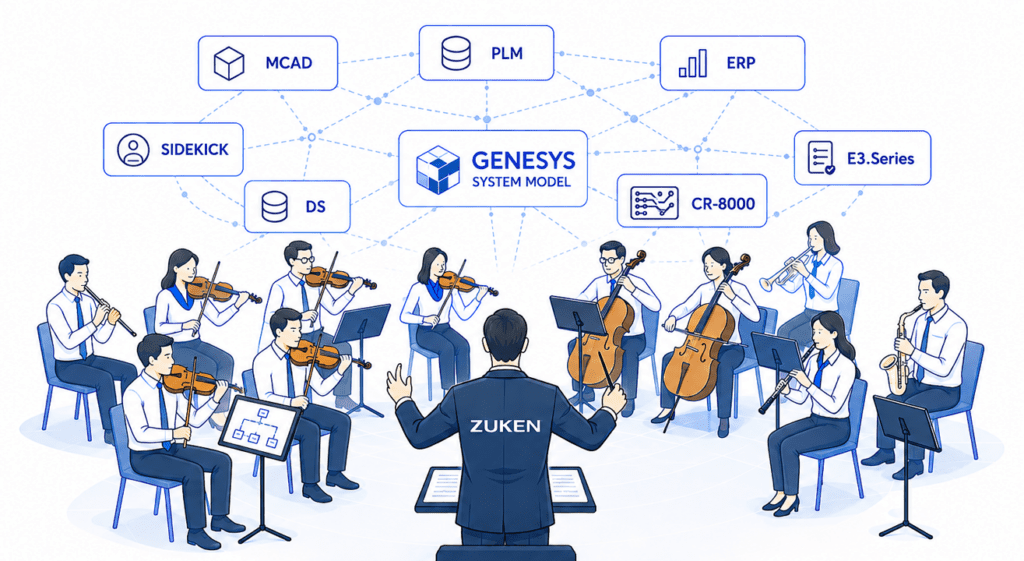
This shared reference provides the foundation for the structured coordination of distributed engineering activities within a shared system context. It is this form of coordination that we refer to as engineering orchestration.
In this role, MBSE serves two critical functions: it provides the architectural backbone of the Digital Thread and the orchestration layer that enables coordinated execution across the lifecycle. The result is more consistent engineering processes, improved change management, and clearer traceability throughout the lifecycle.
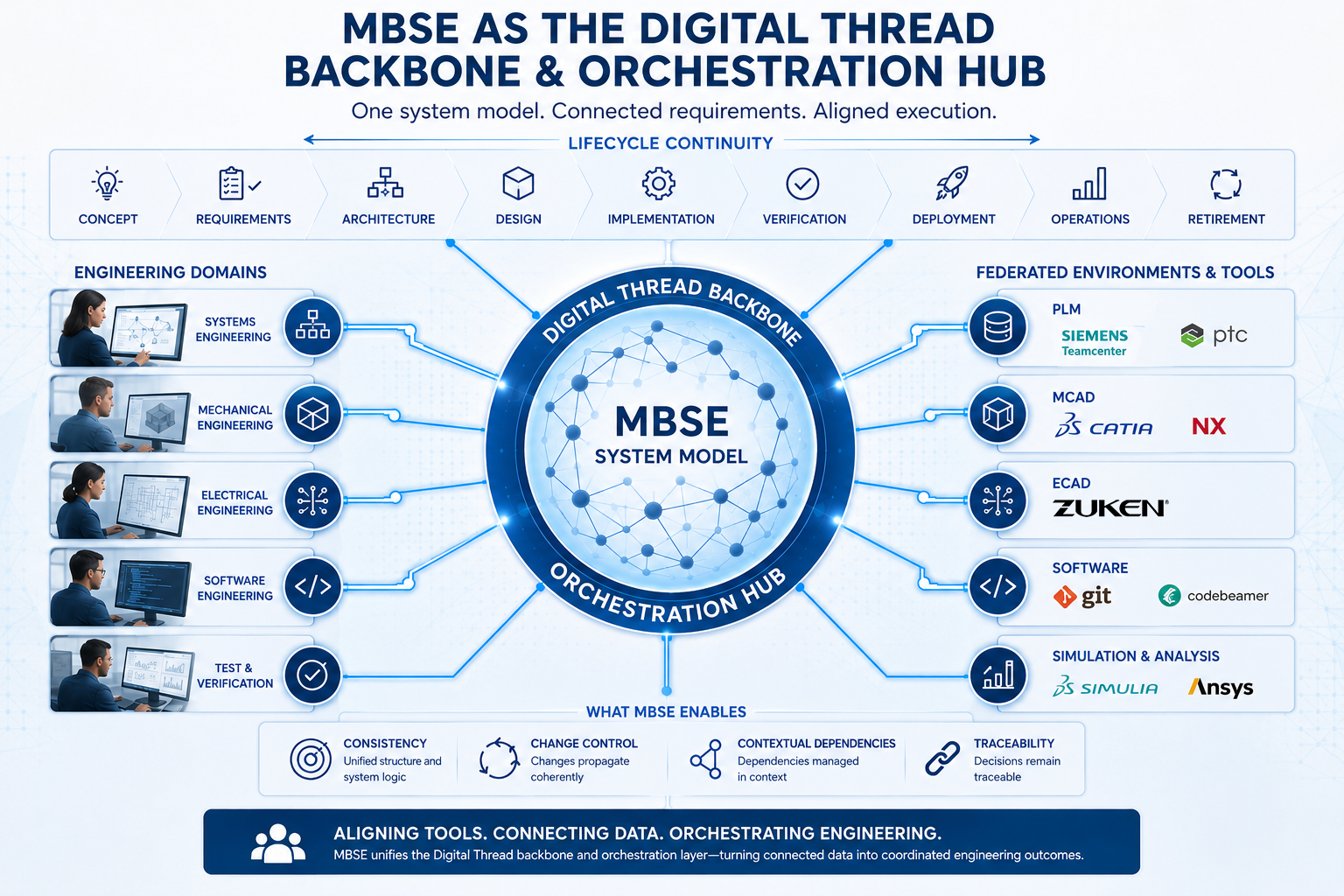 MBSE establishes a traceable relationship between system intent and engineering execution across the Digital Thread, orchestrating requirements, architecture, design, verification, and downstream realization within a unified engineering context.
Continue to Connected Engineering
See how a shared system model establishes a consistent source of truth across domains, enabling traceability, governance, and aligned execution throughout the lifecycle.
Talk to a Digital Thread Specialist
Explore how to move beyond tool integration and establish a model-based backbone that improves coordination, reduces rework, and strengthens engineering execution.