
MBSE as the Foundation of Connected Engineering Establishing a connected system understanding across domains and lifecycle stages

MBSE: The Foundation of Connected Engineering

A shared system context across domains, roles, and lifecycle stages
Menu

From Fragmented Information to Connected Engineering

Beyond fragmented tool landscapes, a more fundamental problem becomes visible: requirements, architectures, design data, and validation results are often distributed across models, spreadsheets, and documents without a consistent structure or shared system logic.

The goal of Connected Engineering is to create a shared system context in which this information remains consistent, traceable, and structured across domains and lifecycle stages.

Model-Based Systems Engineering provides the foundation for this approach. It structures system information within a shared model and connects requirements, architecture, and implementation through a common system logic. This ensures that engineering decisions are based on a coherent and continuously aligned system definition.

The System Model as a Single Source of Truth

At the center is an authoritative system model that structures the relevant information from requirements to implementation. Instead of distributing knowledge across documents and disconnected tools, engineering artifacts are organized within a shared system context.

Standardized structures and a shared system logic create consistency and traceability. Relationships between requirements, architecture, and implementation remain aligned, even when projects require specific adaptations.

This makes the system model a single source of truth for engineering decisions. It reduces misalignment across domains and increases confidence in engineering decisions.
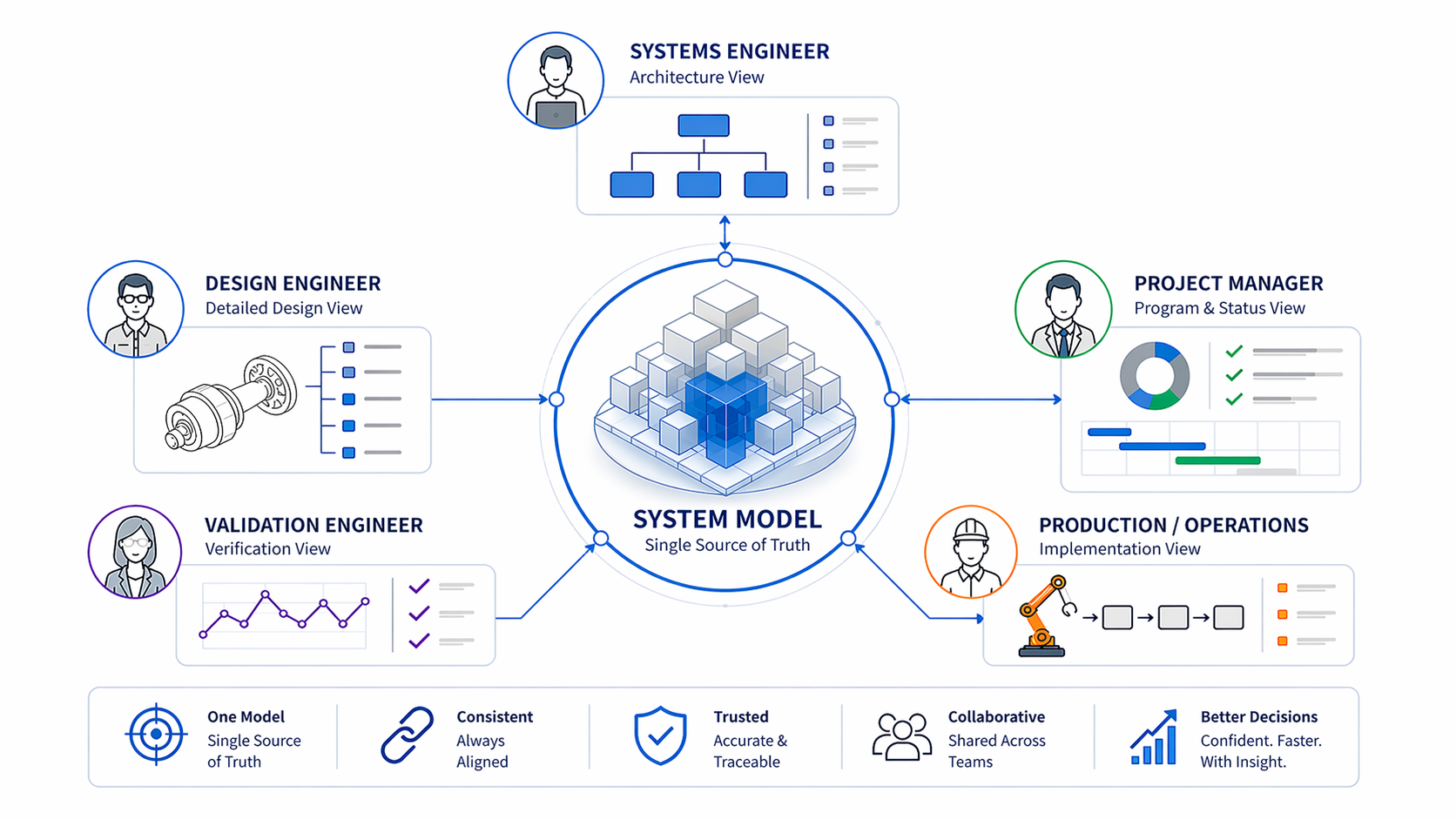
System model shown as a single source of truth connecting systems, design, validation, project management, and production teams through aligned role-specific engineering views.

A shared system model brings requirements, architecture, and implementation into a single source of truth, supporting alignment, traceability, and confidence in engineering decisions.


A shared system context keeps system information consistent and traceable. This enables aligned decisions, reduces rework, and makes engineering outcomes more predictable.

Governance and Compliance in Connected Engineering

In complex and often regulated development environments, engineering must ensure transparency, traceability, and control. Requirements, architecture, and validation results need to remain connected throughout the lifecycle.

The foundation for this is a shared system context in which system information remains linked across domains and development stages. Decisions are anchored in this context, change histories become transparent, and dependencies remain visible.

This helps organizations ensure compliance, reduce risk, and maintain confidence in engineering outcomes. Instead of relying on reactive coordination, teams gain structured control, clearer accountability, and improved auditability.

Flexible Integration into Engineering Workflows

Connected Engineering does not mean replacing domain-specific tools. What matters is a shared reference that links their outputs while allowing each domain to continue working in its own context.

System information is not only structured within the model; it is connected to the areas where it is applied. Engineering activities remain aligned with system intent, even when they are executed across different tools and domains.

In this way, the system model connects system definition with implementation. The approach therefore goes beyond data consistency: it supports real engineering work, reduces transfer errors, and improves alignment between system intent and implementation.


A reliable single source of truth supports governance, risk reduction, and alignment across domains and lifecycle stages.

Continue to Stakeholder Collaboration

Explore how the shared system context becomes usable across the wider organization — with role-based access, shared understanding, and aligned decisions across teams.

Explore Stakeholder Collaboration

Put Connected Engineering into Practice

Discuss how a shared system context can improve governance, align teams, reduce rework, and support more consistent engineering execution.

Start the Conversation