
MBSE System Architecture Design for Complex Systems
Align requirements, behavior, and interfaces within a consistent architecture to reduce complexity and enable reliable system delivery
Menu
System architecture defines the fundamental organization of a system through its components, relationships, and interaction with the operating environment. It spans behavioral, physical, and programmatic dimensions, and its consistency directly determines system performance, integration risk, and delivery outcomes.
GENESYS enables structured architecture development using proven systems engineering methodologies. It captures, connects, and manages system information to maintain alignment, expose inconsistencies early, and ensure architecture remains coherent as systems evolve.

Establish architecture as the foundation for engineering execution
Defining the architecture early establishes the structural foundation that aligns system intent with enterprise objectives. It is the most effective point to control complexity before it propagates into detailed engineering and program execution.
GENESYS allows engineering teams to start from requirements, capabilities, mission needs, or strategy, and develop a connected system architecture that governs downstream engineering activities. As the design evolves, traceability, consistency, and cohesion are maintained across the lifecycle, enabling more predictable delivery in both traditional and agile development environments.

Control your interfaces, both external and internal.
Systems often break at the interfaces—external interfaces with other systems and internal interfaces between system components. Properly defining those interfaces requires understanding both sides of the interface as well as maintaining consistency between the behavioral and physical dimensions of your system definition. Modeling your system in GENESYS provides clarity into not only the interface definition, but also into decisions that impact interfaces, enabling you to control this aspect so critical to system success.
Connect architecture to analytics, bringing the necessary rigor to your project.
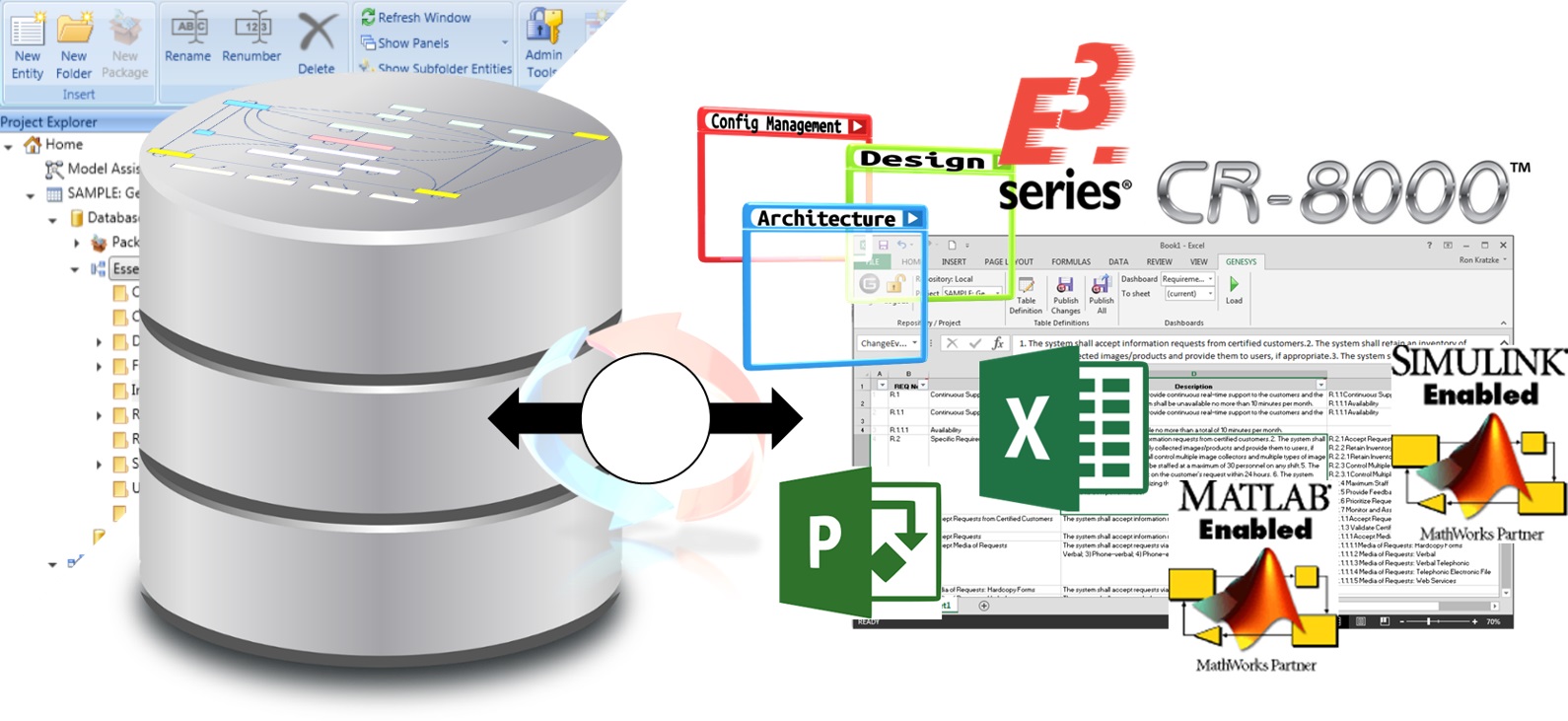
Descriptive architecture defines your system and provides an opportunity to manage complexity. Analytics bring necessary rigor to project decisions, ensuring that the system architecture is achievable and will deliver the required performance. GENESYS clearly exposes and manages the design-dependent parameters that characterize your architecture as well as the corresponding equations that define system performance. Track objectives, integrate with analytical tools ranging from MATLAB to ModelCenter, and run analyses to determine where you are on target and where your system is outside of its performance envelope.
Define the design envelope for your system components.
The architecture establishes the fundamental organization of the solution, the interactions and interfaces between the system components, and the design envelope for each system component. As the architecture is refined to greater detail and evolves to address changing needs, Vitech solutions seamlessly maintain consistent definitions for the architecture and its components, enabling a convergent and balanced design process. The resulting technical data packages convey the complete picture required for successful detailed design. When you’ve completed your architecture, you’ve got interface definition, required functionality, design constraints, associated requirements, physical and behavioral context, rationale and design history, analytical dependencies, and multi-dimensional traceability—everything your detail design team needs to successfully deliver their part of the system.

Engage stakeholders and team members with documentation and artifacts on demand.
Successful systems engineering leverages collective intelligence to gain shared understanding of both problem and solution. Effectively engaging stakeholders and specialists requires communicating up-to-date information in a form they’re comfortable with, on demand. Vitech’s unique technology and proven foundation enables the systems team to focus on engineering the system with their chosen views while automatically generating other diagrams, tables, and documents throughout the process. Bring the “Aha!” to your audience and bring their insight to your solution.