
digital-transformation-11-1510x731

Digital Transformation in Engineering

Managing system complexity. Coordinating development. Steering change with confidence.
Menu

Systems Thinking in Engineering

Companies developing complex products have spent decades optimizing their development processes and engineering tools. Yet rising system complexity, cross-domain dependencies, and fragmented engineering IT landscapes increasingly expose the limits of document-based development.

In engineering, digital transformation is not achieved by digitizing documents alone. It requires a model-based approach that connects processes, IT systems, and cross-disciplinary collaboration through a shared system model. This creates a consistent understanding of the system across the entire lifecycle — from initial concept to operation. Development activities can be coordinated more effectively, dependencies become transparent, and system architectures become more robust.

From Model to Product Value

Many digital transformation initiatives focus on enterprise systems, analytics, or workflow automation. In engineering, however, sustainable value emerges only when system models support the development of real products and systems.

Models, architectures, and system concepts deliver value when they guide development decisions and are reflected in the actual embodiment of products. Engineering models must therefore be connected to the environments in which systems are specified, developed, tested, and validated.

Digital transformation becomes effective in engineering when system knowledge, development decisions, and implementation remain connected. This ensures that requirements and architecture decisions flow consistently into development, reducing misinterpretation, minimizing rework, and improving development efficiency.
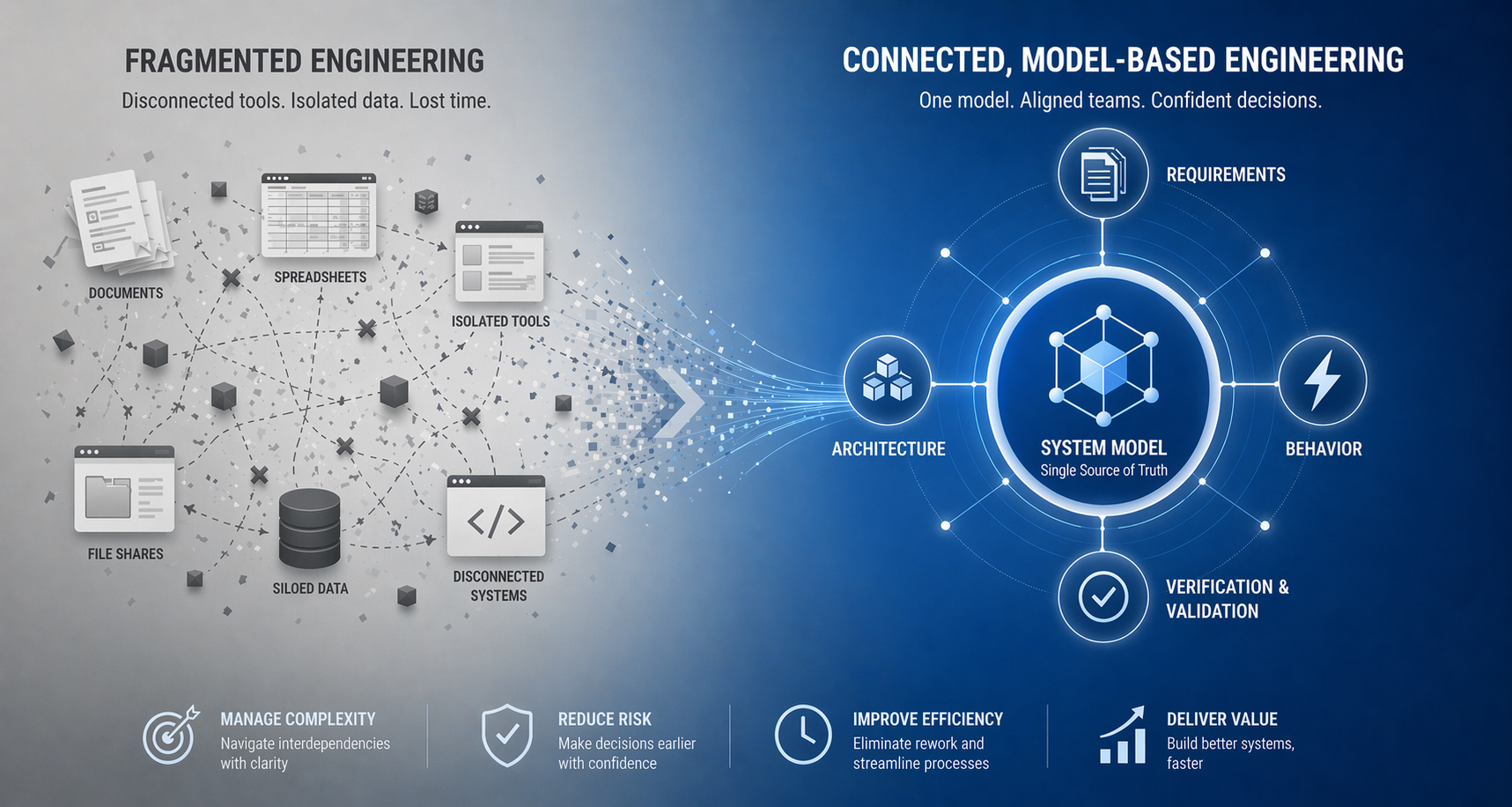
Engineering organizations are moving from fragmented tools and disconnected data toward a system model that enables alignment, traceability, and control across the lifecycle.A shared system model connects requirements, architecture, behavior, and verification. It creates a traceable link between system understanding, development decisions, and product realization. 


Models create value when they support decisions and flow directly into product development.

MBSE as the Foundation of System Architecture

Digital transformation in engineering leads to model-centric development, where system knowledge is structured and governed through models rather than documents. At the core of this shift lies model-based systems engineering (MBSE), which defines the architecture guiding downstream engineering activities.

The system architecture becomes the product’s blueprint — capturing requirements, functional behavior, system structure, interfaces, and verification logic. It defines the product’s DNA and serves as the reference from which engineering disciplines derive detailed designs and implementations.

By anchoring development in this architecture, organizations keep design decisions aligned with system intent across domains and lifecycle phases — from concept and design to production, operation, and service. The result is improved delivery performance through reduced fragmentation, better alignment, and more predictable execution.


Model-centric engineering, enabled by MBSE, turns system architecture into the product’s blueprint—reducing rework, improving cross-domain alignment, and accelerating delivery across the lifecycle.

Resilience in Dynamic Development Environments

Modern technical systems are developed in environments where technologies, markets, and supply chains change at increasing speed. Companies must therefore be able to assess changes early and adapt system designs without destabilizing ongoing development programs.

A structured system model makes dependencies visible and creates traceability between requirements, architecture, and behavior. Development teams can evaluate design alternatives, understand potential impacts, and identify flexible solution options.

Model-centric engineering provides the foundation for better cross-disciplinary alignment, more efficient iterations, and more informed decisions throughout the lifecycle of complex systems. The result is more resilient development processes that can absorb change more effectively and deliver complex systems with greater predictability.

Continue Your Digital Transformation Journey

Explore how a Digital Thread connects engineering tools through a shared system architecture, enabling alignment, traceability, and coordinated execution across the lifecycle.

Explore Digital Thread & Orchestration

Talk to our Digital Transformation Specialists

Discuss your engineering challenges and explore how organizations are improving decision-making, reducing complexity, and building more resilient development processes.

Start the conversation