




Integrated
PCB design prototyping software
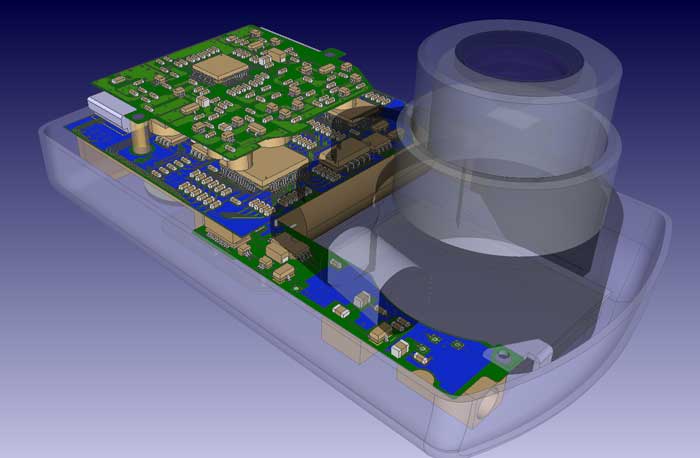
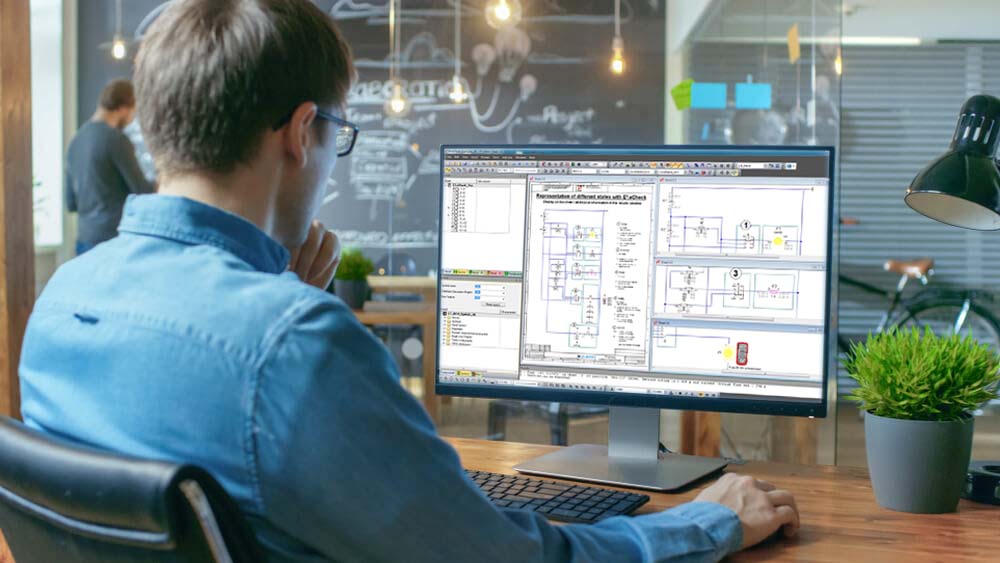
As an integral part of the CR-5000 tool suite, CR-5000 Lightning is the key to getting rapid, accurate results, coupled with first-rate Signal Integrity and EMC. This powerful PCB design prototyping software allows you to realize your PCB design more rapidly, while maintaining Signal Integrity (SI) & EMC. You can carry out simulation and routing according to the applications constraints, and share information via a single constraint database. The front-loaded board development that is facilitated by CR-5000 Lightning means you can reduce design cycle time by weeks. High-speed design issues are resolved early, not by find-and-fix, through the provision of tools for carrying out complex routing and analysis in a straightforward, efficient manner.
The direct simulation links, Lightning Si-Prolog and Lightning SI-Epilog, embedded within CR-5000 System Designer and CR-5000 Board Designer, enable you to check simulation results for both proposed and routed net topology instantly, without switching applications.
Front-loaded design yields first-rate quality and shortest overall design cycles. Using the completely integrated approach for high-speed PCB design that CR-5000 Lightning provides, you benefit from unified and shared design constraints, eliminating complexities associated with separate design and control for activities such as circuit design, floor planning and routing. Synchronization of common analysis engines, editors and viewers makes a front-loaded design process easy to achieve.
Routing symmetry, and the resultant electrical symmetry, make electrical performance predictable and reliable. New routing features have been pioneered in Lightning, with the introduction of concepts such as Trunking and Intelligent Design Objects.(IDOs). Trunking lets you route buses, groups of signals and differential pairs on multiple layers as single intelligent objects, thus maximizing routing symmetry and minimizing skew. Connections to component pins at trunk ends can be auto-routed dynamically, and adapt in real time to your interactive trunk routing. You can easily connect other signals to a trunk using intelligent T-In and T-Out. Intelligent Design Objects are also used for lengthening patterns; you can reshape them, automatically avoiding obstacles, while maintaining the correct delay. Designing tightly constrained, balanced H-Trees becomes a straightforward process using the H-Tree router, which provides an interactive routing solution for this commonly used topology. Length and skew control is easily achieved using the new interactive lengthening tool which maximizes the exploitation of available real estate.
Lightning integrates Zuken's industry-leading router with powerful simulation tools to enable fast and efficient design of high-speed electronic products. Its in-depth analysis and what-if capabilities, available throughout the design process, mean you can explore the design envelope, trading off SI parameters such as crosstalk, timing or EMI requirements against mechanical and thermal constraints. In addition, EMC and power integrity analysis are possible at the routing stage, with easy-to-interpret feedback directly into the routing application, such as the color-coded voltage map showing possible unwanted antennas.
Why Lightning?
The increase in electronics design complexity resulting from a growth in density, miniaturization and multi-functionality of products has resulted in a mass rise in high speed, high gate, high pin count devices that create parasitic effects and routing congestion, driving the requirement for designers to be highly skilled in high-density design and manufacturing processes.
At the same time, the need to achieve front-loaded, right-first time design means you need consistent applications and analysis from pre-design what-if ‘scenario’ analysis right through to finished board.
Zuken has based this high-speed design environment on the following key concepts, necessary for effective, timely, and reliable creation of high-speed products:
- Unified Constraints
Use of unified and shared design constraints eliminates the complexities associated with separate constraint sets and provides control for activities such as circuit design, floor planning and board design.
- Process Orientated
Unification and communication between board design and system design with high-speed constraints and analysis enables a process-oriented method of development.
- Unified Analysis Engine
Sharing the same analysis engine throughout ensures consistency and compatibility of results, eliminating mistakes due to misinterpretation of differently-presented data.
- Frontloaded Verification
Frontloading of verification improves design quality and time to market. In addition to SI analysis at all stages of design, EMCand Power Integrity analysis are possible at the routing stage. Problems that were previously impossible to check during prototyping can be verified and resolved one or two stages earlier – bringing quality forward in your process. This not only assists engineers to meet important electrical and mechanical constraints, but also speeds up the process to final product specification. Design parameters are followed throughout the design process to ensure manufacturability.
- Combined Technology
Combined unique technology provides effective handling of complex multi-board designs at the system interface level, meaning the design of items such as cross-board differential pairs can be verified concurrently with board design.
Using conventional know-how is no longer enough to achieve designs that meet specifications demanded by global customers, and gaining the knowledge and experience to be a fully fledged high-speed designer can take years. Having the technology that is at the cutting edge of innovation will help you adapt to the new environment and challenges of today and prepare for those of tomorrow
.
High-Speed PCB Design Consulting
As a technology leader in PCB design, High-Speed, Signal Integrity and EMC, Zuken understands your development challenges. Zuken provides products and services to help you to meet them.
* CR-5000 Lightning is built upon technology from CR-5000 and uses portions of the technology from the former Hot-Stage solution.
**
VISULA users can also fully adopt the CR-5000 Lightning high-speed routing and simulation technology. |