How Digital Engineering Improves Rail Electrical Design
Rail transportation depends on reliable electrical systems. Behind every locomotive, passenger car, and transit vehicle is a sophisticated network of wiring controls, communications, safety systems and onboard electronics.
As rail vehicles become more connected and remain in service longer, rail electrical design becomes harder to manage. Engineering teams must support large systems, fleet-specific variants, and decades of retrofit activity without losing control of design data.
Digital engineering helps solve this problem by connecting electrical design data across the vehicle lifecycle. With the right tools and processes, rail teams can improve accuracy, reduce rework, and keep fleet documentation aligned with the current vehicle configuration.
Why Rail Electrical Design Is Uniquely Complex
Rail electrical design presents challenges that differ significantly from those of automotive, commercial vehicles, and heavy equipment. Here’s how the size, lifespan, and diversity of rail vehicles create difficult demands on engineering teams.
1. Trains are large and system-dense
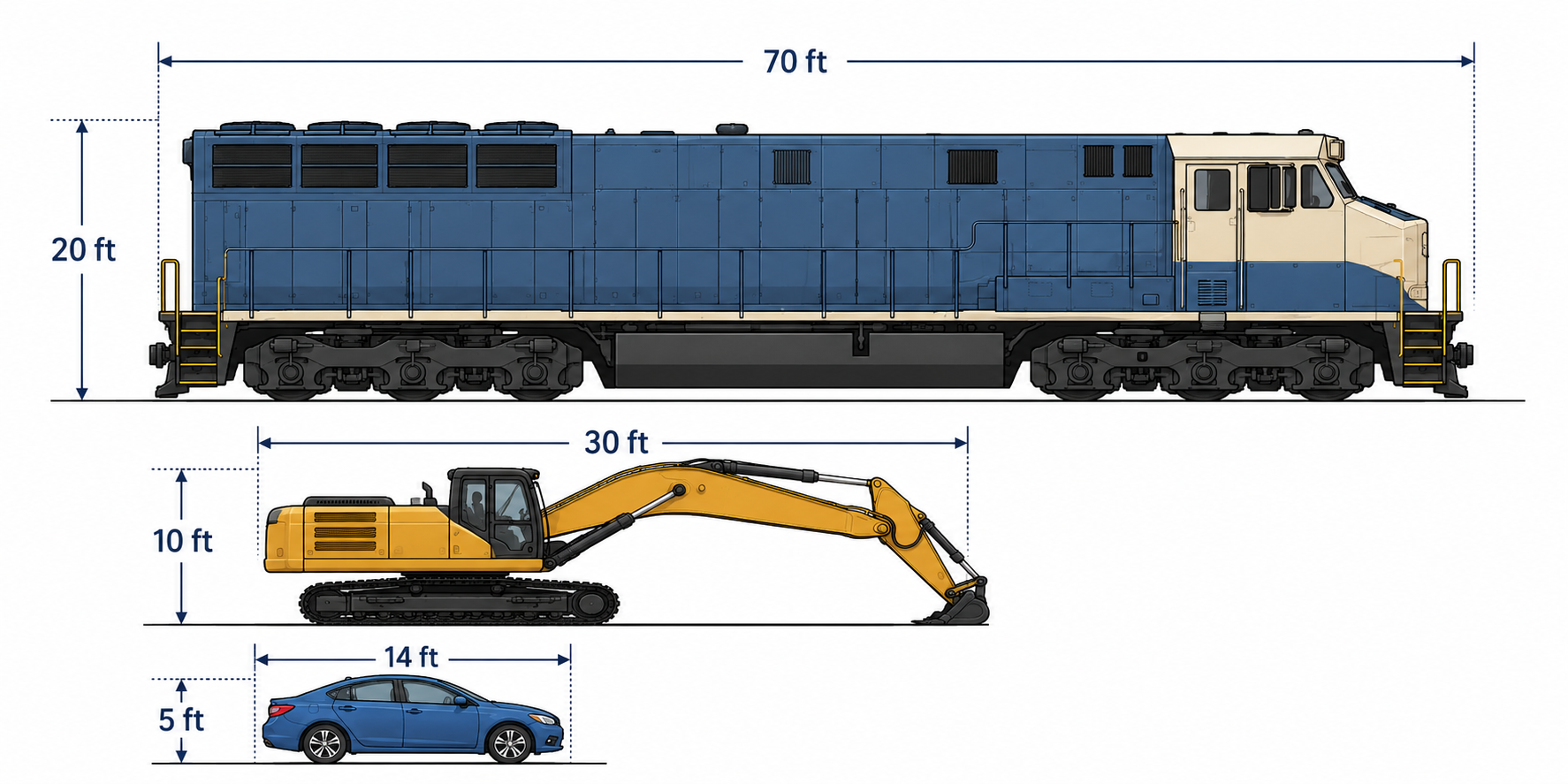
Trains aren’t simply larger than cars and trucks; they’re more complex.
Modern rail vehicles contain extensive electrical systems that span multiple cars, cabinets, and subsystems connected by miles of wiring. In addition to typical vehicle systems such as propulsion, lighting, and HVAC, rail vehicles often incorporate passenger information systems, communications equipment, security systems, signaling interfaces, and more.
This scale makes rail projects difficult to manage. Engineers must track thousands of interconnected design elements across large vehicle platforms. Paper documentation, institutional knowledge, and disconnected design files quickly become difficult to maintain as project complexity grows.
2. Trains are retrofitted, not replaced
Rail vehicles often remain in service for decades. When new technology emerges for commercial vehicles, consumers typically purchase a newer model. Rail operators usually take a different path. Instead of replacing entire fleets, they retrofit existing fleets with upgraded communications systems, passenger amenities, monitoring equipment, and other new technologies.
As modifications accumulate, ensuring accurate engineering documentation becomes increasingly important. Engineers need a trusted source of design data that reflects the vehicle’s current state and clearly captures how systems interact.
3. Rail fleets require configuration management
Rail vehicles are neither one-off products nor pre-configured consumer products. Instead, manufacturers deliver fleets that share common designs while incorporating customer-specific requirements, regional regulations, or operational differences.
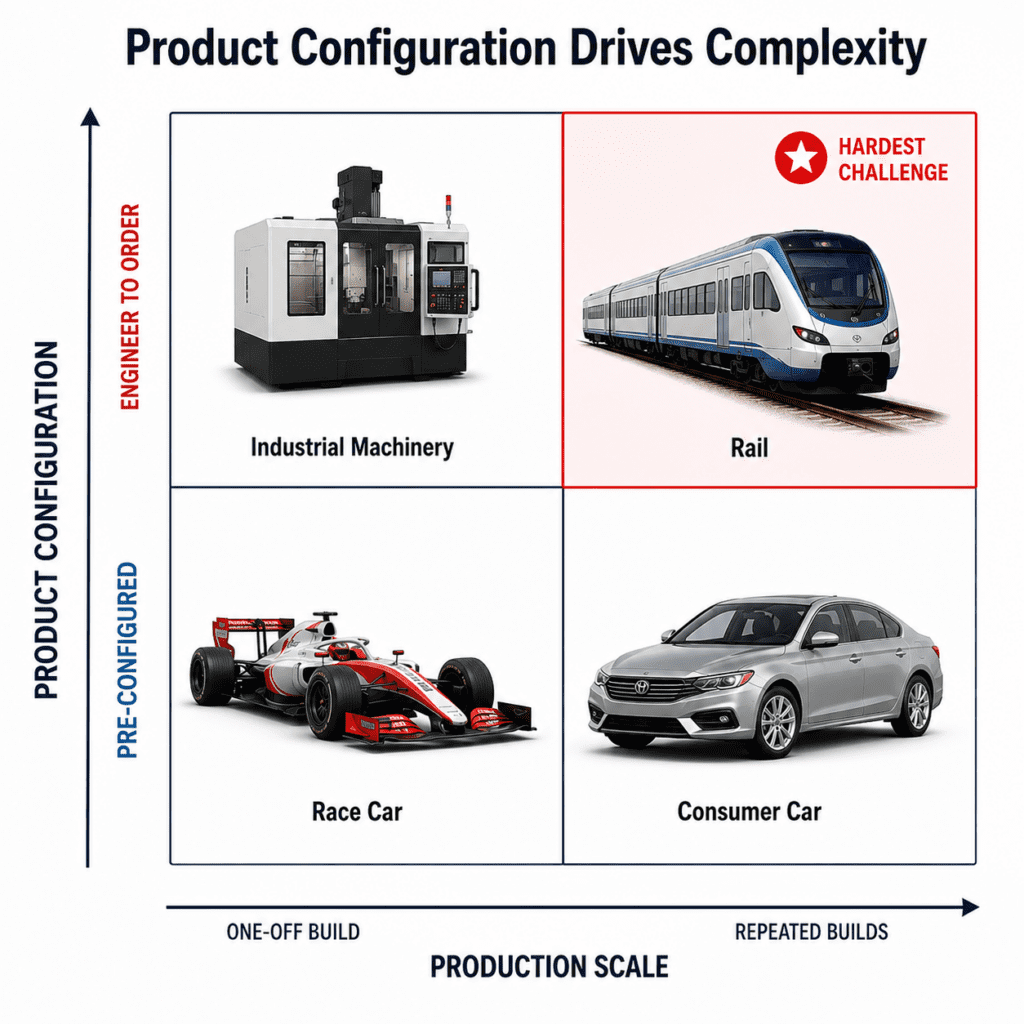
That creates a difficult configuration management challenge.
If every vehicle were unique, each could be documented independently. If every vehicle were identical, a single set of documentation would suffice. Rail programs typically fall somewhere in between, requiring engineers to manage common designs, fleet-wide updates, and variant-specific modifications simultaneously.
Product Line Engineering Supports Fleet Variation
While individually unique, rail fleets often share common platforms and engineering architectures. Product Line Engineering (PLE) helps organizations manage these fleets as product families rather than isolated projects. With PLE, teams can reuse common designs and subsystems across programs while preserving the configuration details that make each fleet unique.
Digital engineering tools support this approach by organizing related fleets, variants, and reusable modules within a connected design environment. Engineers can identify shared designs, track configuration differences, and apply changes across product families while maintaining control of fleet-specific requirements. This reduces duplicate effort, improves consistency, and simplifies technology upgrades across product families.
The Digital Thread Connects Rail Design Changes
Rail vehicles contain interconnected electrical, mechanical, software, and control systems. A change to one subsystem can affect schematics, bills of material, manufacturing outputs, and maintenance procedures, retrofit documentation, and service procedures.
Without connected data, it is difficult to understand the full impact of a change.
A digital thread helps rail engineers connect design changes across disciplines and deliverables. During fleet modernization and retrofit programs, modification packages remain synchronized with the latest engineering data throughout the retrofit process. The result is faster upgrades, improved collaboration, and fewer errors during retrofit execution.
A Single Source of Truth Keeps Rail Electrical Data Reliable
Because rail vehicles often remain in service for decades, engineering artifacts need to outlive the teams that created them. Engineers and customers alike need a trusted place to find historical design information.
Digital engineering tools establish a single source of truth for engineering data and documentation. Historical revisions, design decisions, and previous modifications remain accessible throughout the vehicle lifecycle, ensuring stakeholders can always reference accurate information.
This improves collaboration, reduces confusion, and provides a reliable foundation for configuration control.
How Zuken Supports Rail Electrical Design
Zuken provides proven digital engineering tools to create and manage rail electrical design data throughout the vehicle lifecycle.
E3.series helps engineering teams design complex rail vehicles while keeping schematics, cables, bills of material, harness documentation, and manufacturing outputs synchronized from a common electrical design environment.
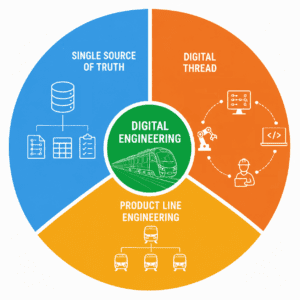
DS-E3 provides the data management foundation needed to support long-lived rail programs. A centralized design repository establishes a single source of truth, maintains a digital thread across engineering deliverables, and enables product line engineering through fleet, variant, and configuration management.
Together, E3.series and DS-E3 help rail organizations support retrofits, manage platform evolution, and keep electrical design data accurate over time.
Building a Better Foundation for Rail Electrical Design
Rail electrical design will only become more complex as fleets add connected systems, monitoring technology, safety features, and passenger-facing electronics. Teams that rely on disconnected files and manual documentation will struggle to keep pace.
Digital engineering gives rail organizations a better foundation. Product line engineering, a connected digital thread, and a single source of truth help teams manage complexity across platforms, retrofits, and fleet variants.
Explore how E3.series and DS-E3 support connected rail electrical design, or contact Zuken to discuss your fleet engineering challenges.
Related Resources

-
Application Engineer

- Blog
- Blog
- Blog

- Blog
Related Products and Resources
- Blog
- Blog
- Products
- Webinar