aircraft-maintenance-0x844-3-1500x731

Digital Thread & Engineering Orchestration

Aligning federated engineering tools through a model-based backbone and orchestrating their execution across the lifecycle
Menu

Digital Thread: From Concept to Engineering Reality

The Digital Thread is often described as a seamless flow of data across tools and lifecycle stages. Yet in practice, it must go beyond connectivity. It needs to anchor engineering artifacts in a consistent system context where requirements, architecture, and implementation remain aligned.

A meaningful Digital Thread ensures that engineering decisions are not isolated within domains but remain traceable across the entire lifecycle. Requirements link to realization, architecture guides detailed design, and changes are assessed early through impact analysis.

Only when the Digital Thread is rooted in engineering logic—not just integration—can it support real decision-making and deliver measurable value. This allows engineering teams to make decisions earlier, assess impact with greater confidence, and reduce downstream rework.

The Limits of Integration-Driven Transformation

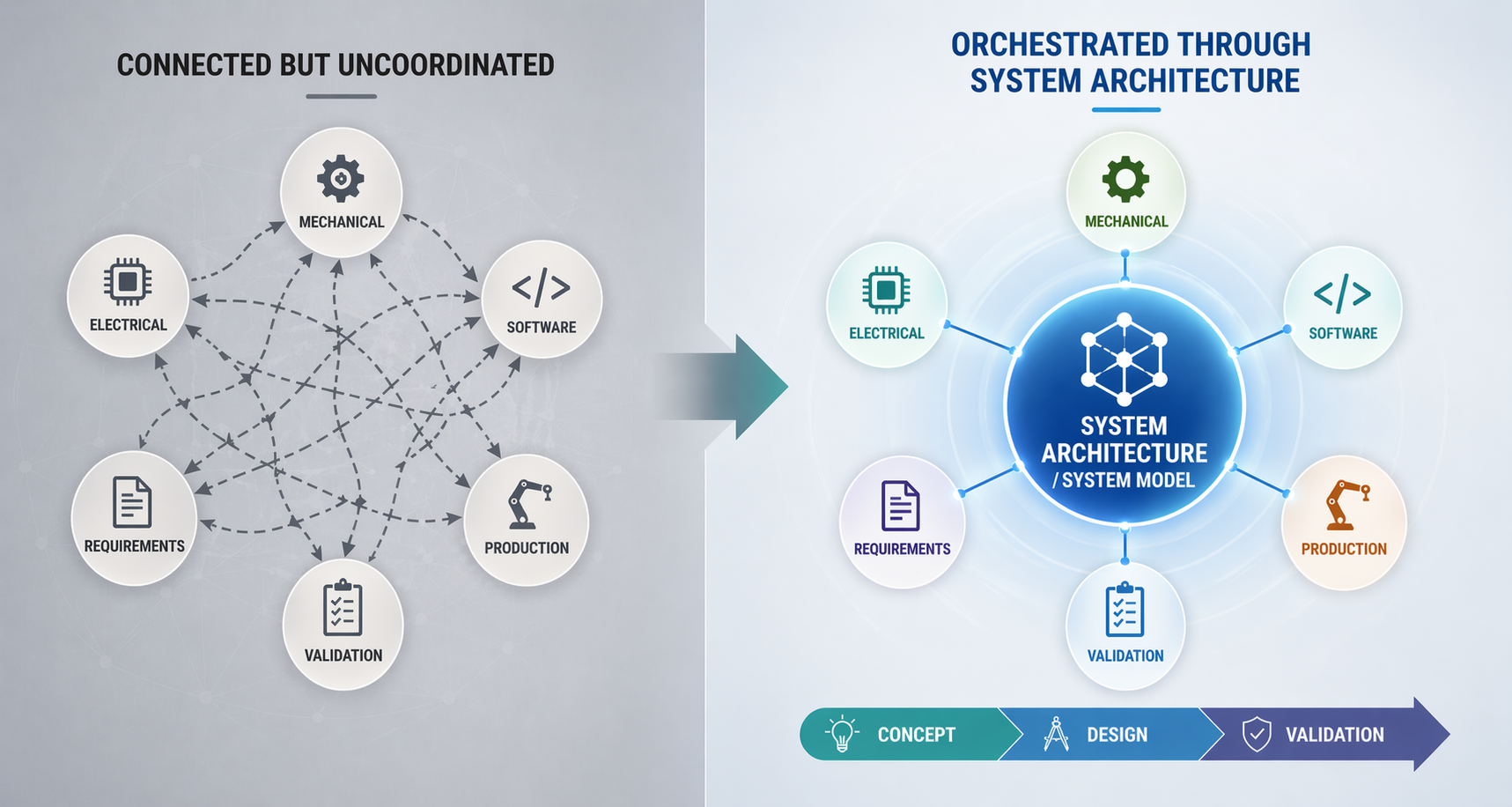
Many digital transformation initiatives focus on connecting tools, harmonizing data, and automating workflows. While these efforts improve efficiency, they often fall short of addressing the core challenge: defining and maintaining a consistent system understanding across domains.

In modern engineering environments, specialized tools operate with their own models, structures, and semantics. Connecting them technically does not ensure that they follow the same system logic.

As a result, organizations achieve connectivity—but not coherence. Engineering remains fragmented, and alignment is achieved through manual coordination rather than structural consistency leading to slower decision-making, increased coordination effort, and higher risk of inconsistency.

From tool integration to engineering orchestration. A model-based backbone aligns federated systems, enabling traceability, coordinated change, and lifecycle-wide decision-making.From tool integration to engineering orchestration. A model-based backbone aligns federated systems, enabling traceability, coordinated change, and lifecycle-wide decision-making.


A meaningful Digital Thread goes beyond connectivity—anchoring engineering artifacts in a shared system context to ensure alignment, traceability, and value-driven decisions.

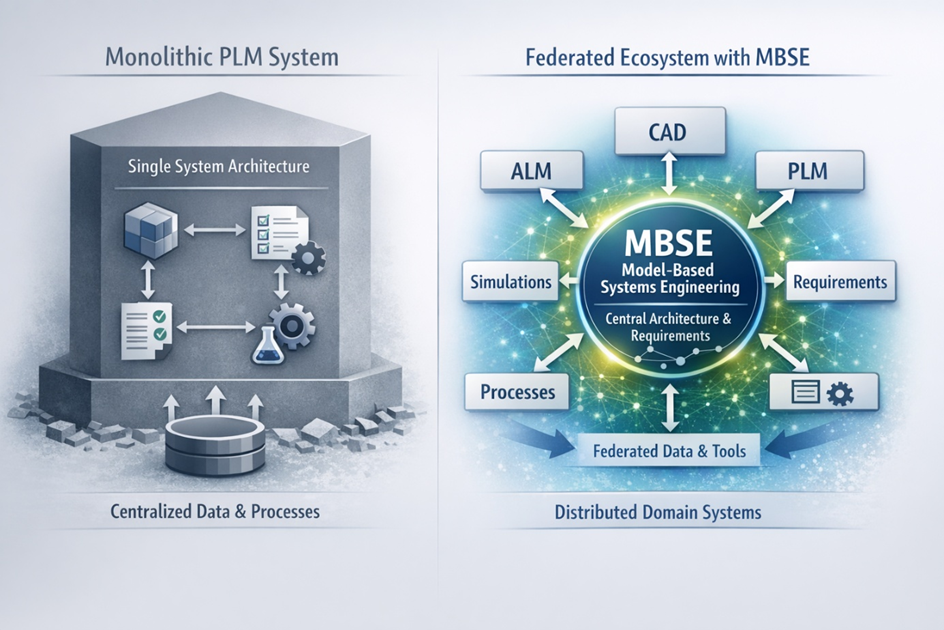
Federated Systems Require Architectural Guidance

Today’s engineering landscapes are inherently federated. Mechanical, electrical, software, and manufacturing domains rely on specialized environments that evolve independently.

This shift increases flexibility and domain efficiency, but it also introduces a fundamental question:
Who defines the system architecture that connects all these domains?

Without a shared architectural reference, integration becomes reactive. Interfaces are managed, but system intent remains unclear. Dependencies are discovered late, and consistency must be enforced manually.

The Digital Thread therefore cannot be reduced to integration infrastructure. It requires an architectural backbone that defines how all elements relate to the system as a whole. Without this, dependencies are identified late, and engineering teams rely on reactive coordination rather than structured alignment.

The Cost of Fragmented Engineering

Federation does not mean fragmentation. While federated systems enable domain-specific optimization, fragmented engineering describes the absence of alignment across the tool landscape.

In fragmented environments, requirements, architecture, design, and manufacturing evolve in isolation rather than in coordination. Engineers spend significant effort reconciling inconsistencies instead of developing systems.

Industry studies indicate that up to 20% of engineering time can be lost due to disconnected tools and manual alignment.

The challenge is therefore not federation itself—but the lack of a shared system logic connecting it. Addressing this reduces time spent on reconciliation and allows teams to focus on system development rather than coordination.

federated-systems-require-architectural-guidance

MBSE as the Digital Thread Backbone & Orchestration Hub

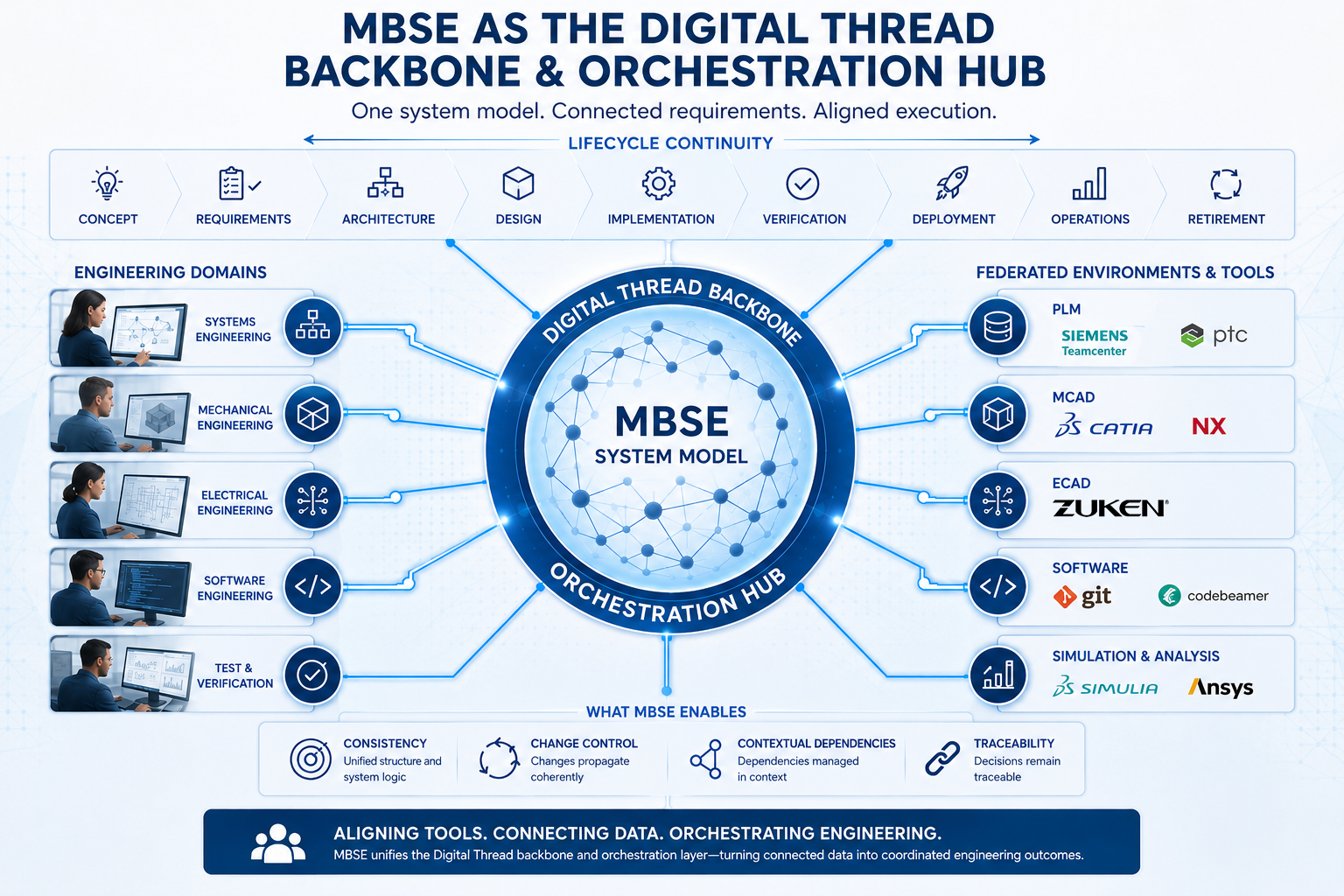
Model-Based Systems Engineering provides the structure needed to align federated environments and enable a consistent Digital Thread.

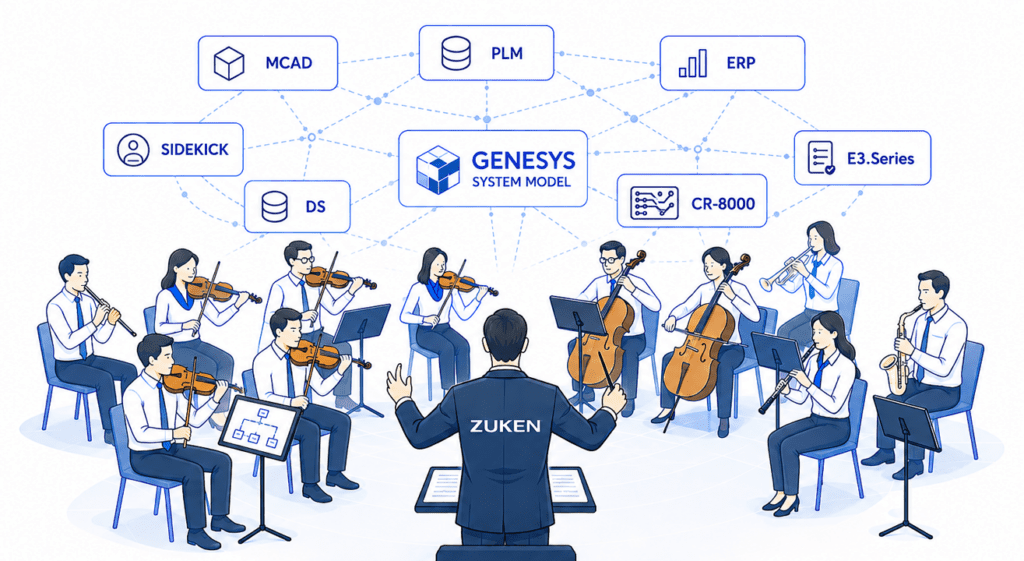
A shared system model defines architecture, connects requirements, and establishes relationships across the lifecycle. At the same time, it acts as the orchestration hub that links engineering domains with the environments where products are designed and realized.

Rather than replacing tools, MBSE aligns them. Engineering data remains distributed, but follows a consistent system logic. Changes propagate coherently, dependencies are managed in context, and decisions remain traceable.

orchestration-simple2-1024x561

In this way, MBSE unifies two critical aspects: it serves as the architectural backbone of the Digital Thread and as the orchestration layer that turns it into an operational engineering reality. This results in more consistent engineering execution, improved change control, and clearer traceability across the lifecycle.


MBSE connects system intent to engineering execution across the digital thread, orchestrating requirements, architecture, design, verification, and downstream realization within a unified engineering environment.MBSE connects system intent to engineering execution across the digital thread, orchestrating requirements, architecture, design, verification, and downstream realization within a unified engineering environment.


Engineering orchestration turns federated systems into a connected digital backbone – reducing fragmentation by aligning systems through a shared, model-based architecture.

Continue to Connected Engineering

See how a shared system model establishes a consistent source of truth across domains, enabling traceability, governance, and aligned execution throughout the lifecycle.

Explore Connected Engineering

Talk to a Digital Transformation Expert

Explore how to move beyond tool integration and establish a structured, model-based backbone that improves coordination, reduces rework, and strengthens engineering execution.

Start the Conversation