An Authoritative Source of Truth for Systems Engineering

Model-Based Systems Engineering (MBSE) provides a structured approach to understanding and managing complex systems. Instead of distributing information across disconnected documents, diagrams, and spreadsheets, MBSE consolidates engineering knowledge into a single, coherent system model.
This model serves as an authoritative source of truth—connecting requirements, architecture, analysis, and implementation. It ensures consistency, enables traceability, and provides the right information to the right stakeholders at the right time for decision-making and analysis.
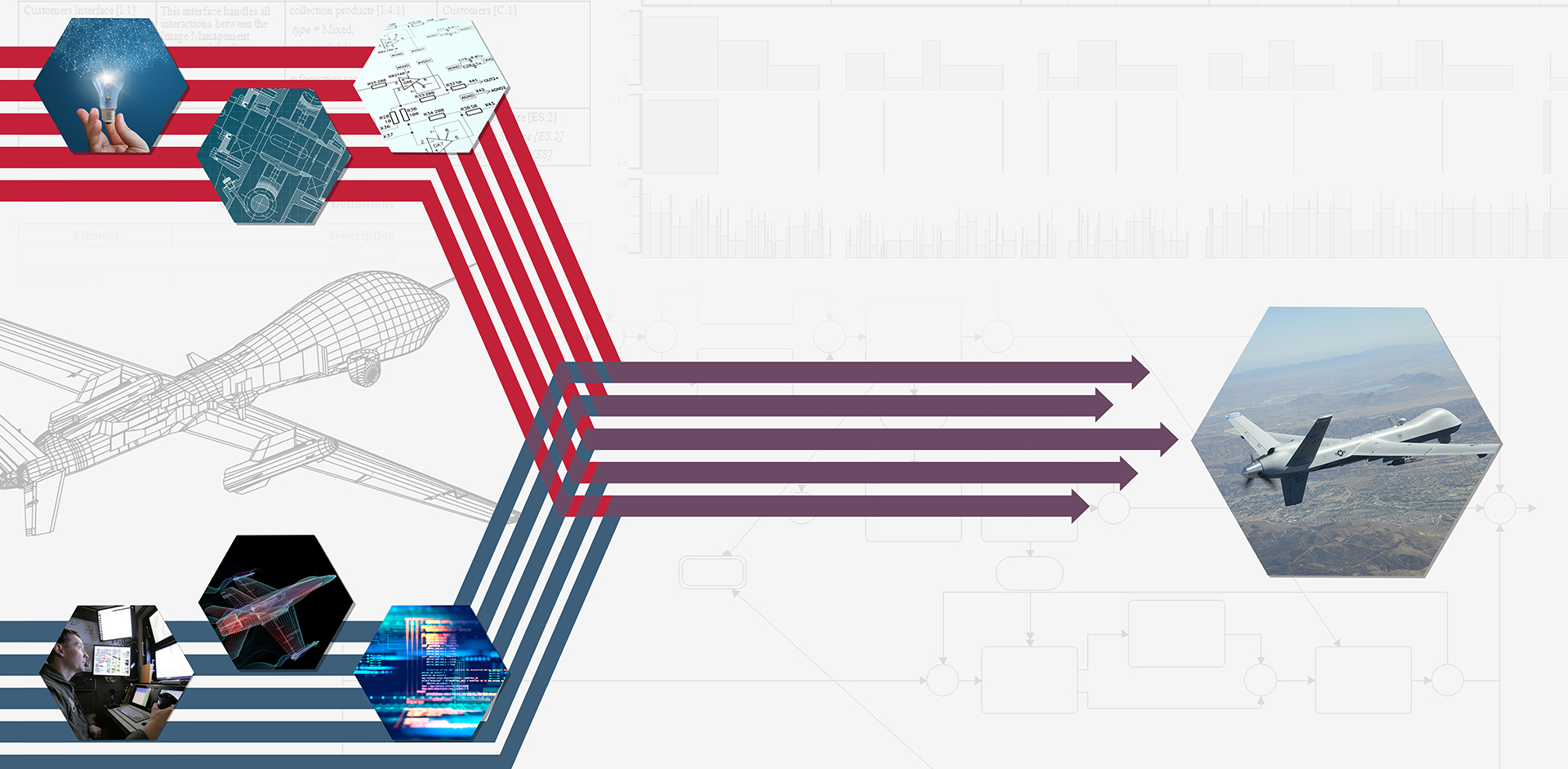

A structured representation of the system
Good system models capture both the problem (requirements) and the solution (architecture) in a consistent and coherent way, improving understanding and managing complexity.
A framework for managing engineering knowledge
Modeling captures key concepts and their relationships at the appropriate level of detail across the entire project lifecycle.
A foundation for improving quality and reducing risk
MBSE enables early identification and resolution of issues before costly defects are embedded in the design.
A basis for communication and analysis before implementation
Modeling allows teams to understand change impacts, communicate design intent, and analyze system behavior digitally before physical realization.
Lower costs
Model-based approaches can reduce costs by up to 55% while improving on-time delivery.
(Source: Sandia National Laboratories, 2016)
Save time
A shared system model eliminates the need to coordinate disparate documents, ensuring all stakeholders work from the same baseline.
Reduce risk
Organizations applying MBSE report up to 68% fewer defects.
(Source: Raytheon Australia, 2011)
Avoid waste
A single integrated model reduces redundancy and prevents rework across the development process.


Examines the 4 domains of systems engineering
Using an MBSE approach allows you to understand the key aspects — requirements, behavior, architecture, and verification & validation — and how they interrelate. This approach yields a robust, comprehensive model.

Takes a level by level approach to problem solving
Good MBSE establishes a high-level view connecting problem, solution, and verification before moving to more and more detail around areas of new requirements, unproven technologies, high risks, and high consequence of failure. This strategy of progressive elaboration enables the engineering team to generate the highest return on investment as they focus their time and energy around the critical aspects and unknowns while working within a cohesive framework.

Increases insight through multiple representations
Implemented correctly, MBSE allows you to represent the system model in multiple ways, tuned to different audiences and different analytical needs, each representation generated from the same underlying data.
Maintains integrity over the lifecycle of a project
MBSE captures not only the system architecture, but also the journey of design — the rationale behind decisions, changes to a system, who made those changes, and when they were made. Requirements, behavior, architecture, verification, risk, concerns, decisions — all are captured, interrelated, and managed across the entire lifecycle of a project, from cradle to grave.